
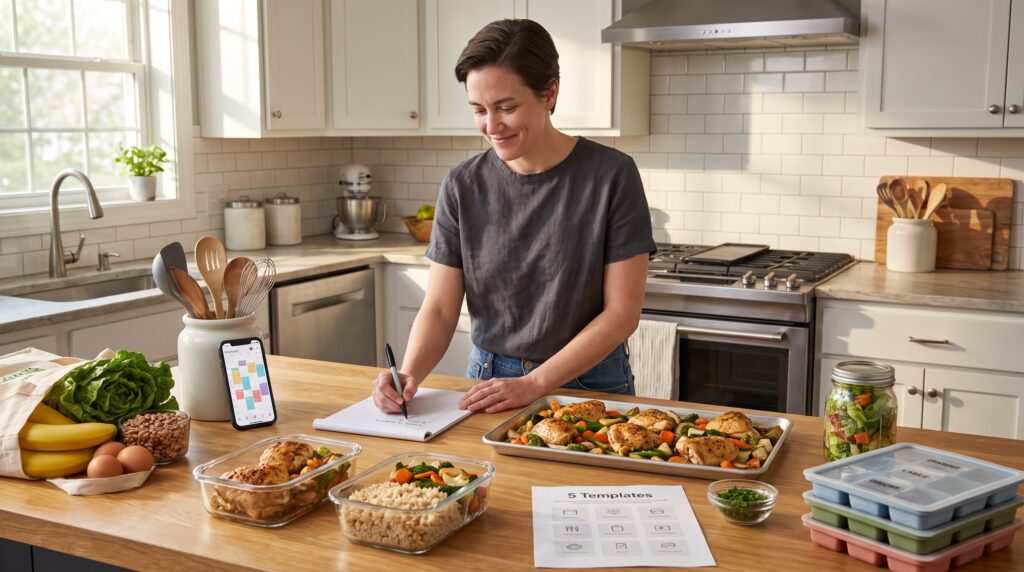
Simple Meal Planning for Busy Weeks begins with a short list and a clear pattern. It removes the daily scramble, prevents impulsive takeout, and helps meet nutrition goals without complicated recipes. This guide gives a 30‑minute system, ready templates, and sensible hacks so people can plan once and cook less often. Readers will find exact steps, reusable weekly templates, and shopping and prep tactics that cut cooking time and food waste. The method fits families, singles, and anyone trying to simplify weekday meals while keeping variety and nutrition.
Key Takeaways
- Simple meal planning for busy weeks reduces decision fatigue and prevents impulsive takeout by using repeatable meal templates and a clear weekly schedule.
- A 30-minute weekly routine involving calendar review, meal template selection, grouped grocery list creation, and anchor-day prep streamlines cooking and shopping.
- Rotating themes and proteins, scheduling leftover nights, and batch-cooking on anchor days optimize variety, nutrition, and time savings.
- Reusable meal plan templates cater to different lifestyles, including high-protein, family-friendly, plant-based, batch-cook focused, and flexible schedules.
- Grouping grocery lists by store sections and prepping staples in advance cut cooking time and reduce food waste effectively.
- Incorporating one wildcard or leftover night preserves spontaneity and allows adapting meal plans based on changing preferences or schedules.
Why Simple Meal Planning Works Better Than Last‑Minute Decisions
Simple meal planning stops choice overload and lowers takeout spending. When someone checks the week’s calendar first, they can schedule cooking on nights that make sense and mark one or two “very simple” or leftover nights for the busiest evenings. That small step alone prevents the common pattern of skipping dinner prep and ordering food.
This approach uses repeatable meal types, sheet‑pan, bowl, pasta, soup, wildcard, to shrink recipe decisions to five familiar formats. Repetition helps the brain: the meal becomes a template rather than a new problem each night. A single weekly shop that follows a grouped list (produce, protein, pantry) reduces impulse buys and food waste. In practice, households that plan this way report fewer wasted ingredients and steadier weekly nutrition.
Real tradeoffs exist. Some people miss spontaneity early on: the remedy is one uncooked “wildcard” night to use leftover ingredients or try a new recipe. Readers who want a broad lifestyle fit can link meal planning to a larger simplicity strategy using a short simple living guide, which frames meal habits inside overall wellness and self‑improvement.
How To Build A Weekly Meal Plan In 30 Minutes
Start with the calendar and work downhill: review appointments, mark late nights, and flag events that require flexible meals. Doing that takes about five minutes and prevents accidental takeout nights.
Next, pick four to five dinner templates plus two simple breakfasts or lunches. This step takes 10–15 minutes. Choose dinners that reuse the same core ingredients, roast chicken one night, chicken bowls another, so leftovers or repurposed proteins reduce prep time. Build a grouped grocery list in five to ten minutes by section: produce, protein, dairy/eggs, pantry, frozen. Finally, pick one or two quick prep tasks for an anchor day: batch‑cook grains or roast a tray of vegetables.
A compact 30‑minute routine usually looks like: 5 minutes calendar, 12 minutes meal selection and list, 8 minutes grocery grouping and prep choices. For practical storage and safety tips while batching, a brief primer on meal prep fixes explains how to keep flavors fresh and avoid soggy meals.
Choosing Themes, Proteins, And Leftover Days (Quick Checklist)
Themes and protein rotation simplify decisions immediately. Use this quick checklist and follow it in order.
Checklist
- Choose 3–5 weekly themes: taco night, pasta night, bowl night, soup/stew, sheet‑pan. Pick themes that match the family’s favorite sauces and sides.
- Rotate proteins: poultry, beef, seafood, eggs, beans across the week to hit protein variety and nutrition goals.
- Schedule leftovers: plan at least 1–2 nights as explicit leftover or simple nights on the busiest calendar days.
- Anchor prep: select 1 anchor day to batch‑cook grains or roast proteins for reuse.
Example: Monday, sheet‑pan chicken (protein: chicken): Tuesday, pasta with tomato and beans: Wednesday, taco bowls (leftover chicken): Thursday, soup (batch‑made on anchor day): Friday, wildcard or takeout. Concrete numbers help: batch‑cooking 4 cups dry rice yields about 12 servings, saving 30–40 minutes across two days.
For quick recipes and short, dependable cook times, pairing this checklist with compact resources like instant pot recipes gives busy cooks fast, reliable options that slot into the weekly plan.
Five Reusable Weekly Templates For Different Lifestyles
Template 1, High‑Protein One‑Pan Week (for active people)
- Monday to Friday: roasted chicken thighs, pan‑seared salmon, turkey skillet, tofu sheet‑pan, egg fried rice. Anchor: roast two trays on Sunday. This saves roughly 2–3 hours total for the week.
Template 2, Family 30‑Minute Dinners
- Stir‑fries, quick pasta, rice skillet, quesadillas, quick baked fish. Use one sauce batch for two meals. These rely on basic pantry staples and hit family tastes quickly.
Template 3, Mostly Plant‑Based Bowls and Sheet‑Pans
- Legume‑forward bowls, roasted root veg, grain salads, tofu skewers, blended soups. Batch‑cook a large pot of beans to use across three nights.
Template 4, Batch‑Cook Plus Leftovers
- Make a big soup or stew and roast a joint protein: plan two leftover nights. One batch of stew (about 10 servings) covers lunches and two dinners: this cuts weekday cooking to 30 minutes or less.
Template 5, Mixed Lifestyle (flexible workers)
- 3 home‑cooked dinners, 2 leftover nights, 2 flexible/takeout nights. This template accepts unpredictability while anchoring three reliable meals.
Each template reduces decision points by using repeat formats. Pick the template that matches the week’s energy and calendar, then reuse it every few weeks to lower friction and grocery complexity.
Smart Grocery, Prep, And Time‑Saving Hacks To Cut Cooking Time
Group the grocery list by store sections and shop once to save time and reduce impulse buys. A grouped list usually saves 10–20 minutes per trip and lowers incidental spend. Keep pantry staples, pasta, rice, canned beans, broth, so a meal can be assembled in 20–30 minutes without extra shopping.
Batch‑cook grains and proteins on one or two anchor days. Example: cook 8 cups of rice and 4 roasted chicken thighs on Sunday: that yields lunches and dinner bases for three days. Label containers with date and portion, which prevents confusion and food waste. Use glass or BPA‑free containers for safety and visibility.
Prep hacks that cut daily cooking time:
- Pre‑chop salad greens or buy washed greens to save 5–10 minutes per meal.
- Make one sauce (tomato, tahini, or soy‑ginger) to flavor multiple dishes across the week.
- Use the freezer: freeze single‑meal portions of soups in reusable silicone trays, then store them flat, each thawed tray saves 20–30 minutes.
Practical warnings: overcooking vegetables during batch prep ruins texture: instead, undercook slightly and finish in a pan. For science‑backed healthy meal planning frameworks, a concise resource explains how planned meals aid nutrition goals at healthy meals planning.
If meal planning feels stale, readers can refresh techniques and flavors using short guides about mindful eating and support like the site’s article on support, health, meal.
Conclusion
Simple meal planning converts weekly choices into a small set of repeatable actions. It reduces decision fatigue, cuts takeout, and keeps nutrition on track. Readers will save time by picking a template, doing one grouped shop, and using one anchor prep day. Start with one template for two weeks: adjust proteins and themes, and the system will feel effortless. For broader lifestyle alignment and ongoing simplicity tips, readers can pair meal planning with decluttering and routine building to make healthy habits stick.