
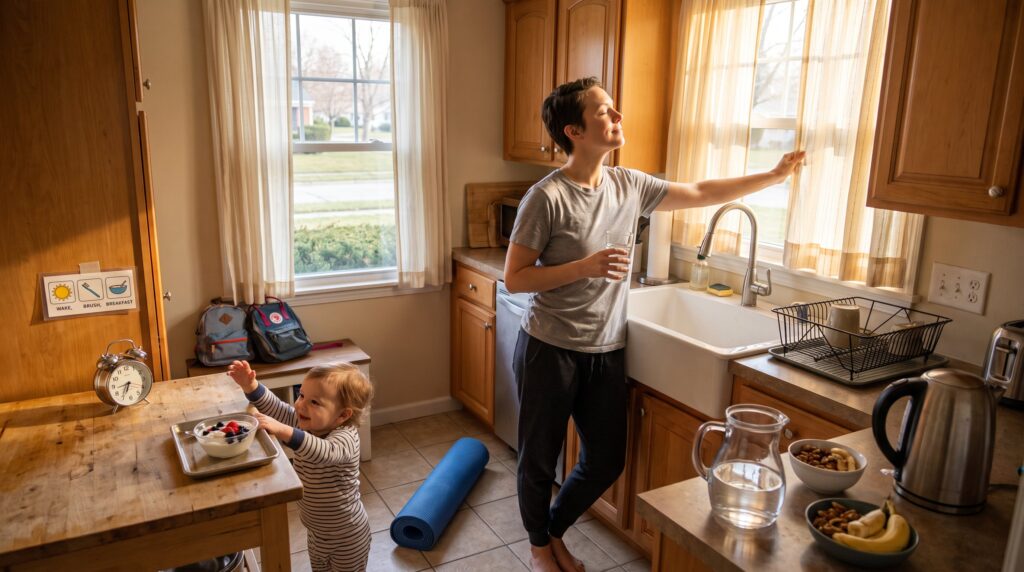
How to Build a Sustainable Morning Routine matters because small morning choices shape the rest of the day. This guide shows clear, repeatable steps that fit busy lives, help energy, and reduce stress. It aims to move readers from chaotic mornings to predictable, health-supporting rituals they can actually keep. The advice is practical, evidence-informed, and tied to family life and work demands. Each section gives a single insight first, then concrete examples and warnings, so readers can adopt one small change today and scale it gradually.
Key Takeaways
- Building a sustainable morning routine improves health, focus, and family life by stabilizing stress and enhancing cognitive performance.
- Keep the routine simple with a fixed wake time, natural light exposure, short movement, hydration, and a brief planning session.
- Start with one small, manageable action and gradually add more after it feels automatic to build lasting habits.
- Customize your morning routine duration to fit your schedule—whether 10, 30, or 60 minutes—for consistent daily practice.
- Use triggers like alarms or cues from your environment and accountability methods to reinforce your morning routine.
- Avoid checking phones immediately upon waking to prevent distractions and maintain mental clarity.
Why A Sustainable Morning Routine Matters — Benefits For Health, Focus, And Family Life
Fact first: a consistent morning routine lowers stress, improves cognitive focus, and stabilizes family mornings. Research links regular wake times, light exposure, and brief movement to better mood and mental performance into mid-morning. For example, waking within a 30-minute window and getting 10 minutes of natural light helps anchor circadian rhythm and reduces grogginess.
Practical context: someone who sets a 7:00 a.m. wake time and spends five minutes stretching then drinking water reports clearer decisions and fewer late-morning lapses. The routine reduces decision fatigue because fewer small choices are made before work starts. Families gain measurable benefits: children who follow a simple shared sequence (wake → brush → breakfast) show fewer rushed departures and more on-time school arrivals.
Specific numbers: short movement for 3–10 minutes raises heart rate and blood flow enough to increase alertness: a 5–10 minute planning session reduces reactive task-switching by noticeable margins later in the morning. Warning: trying to overhaul every part of the morning at once usually fails. Start with one predictable action, then add another after two weeks.
Core Elements Of A Sustainable Morning Routine (What To Keep Simple And Repeat)
Core insight: keep the routine minimal, fixed wake time, light, movement, hydration, and a short planning step. These five actions cover physiology and focus without taking hours.
Fixed wake time and light: waking within a consistent half-hour window and stepping outside or opening curtains for 5–10 minutes stabilizes sleep-wake biology. Movement: 3–15 minutes of stretching, yoga, or walking increases circulation and clears mental fog. Hydration and fuel: drinking 200–400 ml of water within 20 minutes of waking and a simple breakfast with protein supports energy. Planning: 5–10 minutes to name three priorities protects focus and prevents emergency reactivity. Phone boundary: delaying social media or email for 30–60 minutes prevents cognitive hijacking.
Practical anchors: link the action to an existing cue, wake → water, coffee → 5-minute stretch. For families, a shared 3-step checklist taped by the door reduces morning yelling and saves an estimated 8–12 minutes per departure. For readers who want a deeper framework, start here. Warning: do not make breakfasts elaborate: complex recipes undermine consistency.
Sample 10–30–60 Minute Routines You Can Adopt Today
Direct answer: choose a routine that matches available time and repeat it daily. Each sample begins with light and hydration.
10-minute routine (quick but effective): wake at a set time, open a window for natural light (2 minutes), drink 250 ml water, 3–5 minutes of dynamic stretches (neck rolls, cat–cow, hip swings), and 2–3 minutes listing top three tasks. This routine fits even tight schedules and reduces morning panic.
30-minute routine (balanced): wake, 8–10 minute walk or short HIIT, 5–8 minute simple breakfast (Greek yogurt + fruit or oats with nuts), and 5–7 minutes planning. This adds sustained movement and an unhurried bite to stabilize energy.
60-minute routine (deep start): 30 minutes of exercise or yoga, a 15-minute protein-rich breakfast, and 10–15 minutes of personal focus, reading, journaling, or family check-in. This format supports training goals and family coordination.
Concrete example: one parent reported saving 20 minutes of morning friction by switching to a 30-minute plan that moved shower and heavier prep to evenings. Warning: the 60-minute plan is best on days without early commitments: consistency matters more than duration.
How To Build Habits That Stick: Gradual Change, Triggers, And Accountability
Answer first: habits stick when they are tiny, tied to clear triggers, and reinforced with accountability. Start by shrinking a target action until it feels trivial.
Gradual change: reduce a desired behavior to its first step, 1 minute of stretch, not 30, and keep that daily until it feels automatic. Add complexity only after two solid weeks. Triggers: use reliable cues such as the alarm, the kettle, or a light switch. Example triggers: alarm → 200 ml water: espresso machine → five deep breaths. Accountability: share a simple checklist with a partner or child, or track the habit in a basic app for visible streaks.
Specific tactics: place your workout clothes where they are visible to create a visual prompt. Use implementation intentions: “If I wake at 7:00, then I will step outside within five minutes.” For those who struggle with follow-through, a small cost or reward helps, commit to donating $5 for each missed day or celebrate five-day streaks with a favorite coffee.
Evidence link: for building one- or two-step habit changes, a practical approach aligns with behavior-change guidance found in applied psychology and habit literature. For a related practical method to set maintainable goals, consult the guide on setting personal goals.
Troubleshooting Common Roadblocks And Adjusting For Busy Schedules
Straight answer: prioritize one or two nonnegotiable actions and keep them under ten minutes when time is scarce. Most barriers are time, low energy, and caregiving demands.
If time is the issue: choose a 5–8 minute anchor, water, sunlight, and two-minute movement. Reclaim minutes by moving tasks (lay clothes out, prep lunch) to the previous night. A parent example: packing backpacks the night before saved a household 12–15 minutes each morning.
If energy is low: lower the activation cost. Swap a 20-minute run for 3 minutes of dynamic movement and a protein-rich snack. If mornings are chaotic with kids, create a visible sequence card for children and assign a 2-minute “launch” task to each child: this reduces conflict and improves on-time departure rates.
Phone pitfalls: checking email or social feeds first increases stress and distracts from priorities. For older adults or heavy screen users, digital overload can worsen mood: limiting the first screen use to after planning prevents that cascade. For a practical look at mindful starts that protect attention, see the article on mindful mornings.
When to scale: add a new element only after the previous one feels automatic for at least two weeks. If a habit repeatedly fails, shrink it, then rebuild with a stronger trigger.
Conclusion
Takeaway: a sustainable morning routine is minimal, repeatable, and matched to real life. Prioritize light, movement, basic nourishment, and a short planning step. Start tiny, use triggers, and add accountability. Small, consistent changes produce steady gains in energy, focus, and family calm. For practical breakfast ideas that support energy, consult the site’s selections on quick morning meals and for help building daily wellness systems, review the piece on building a wellness routine.