
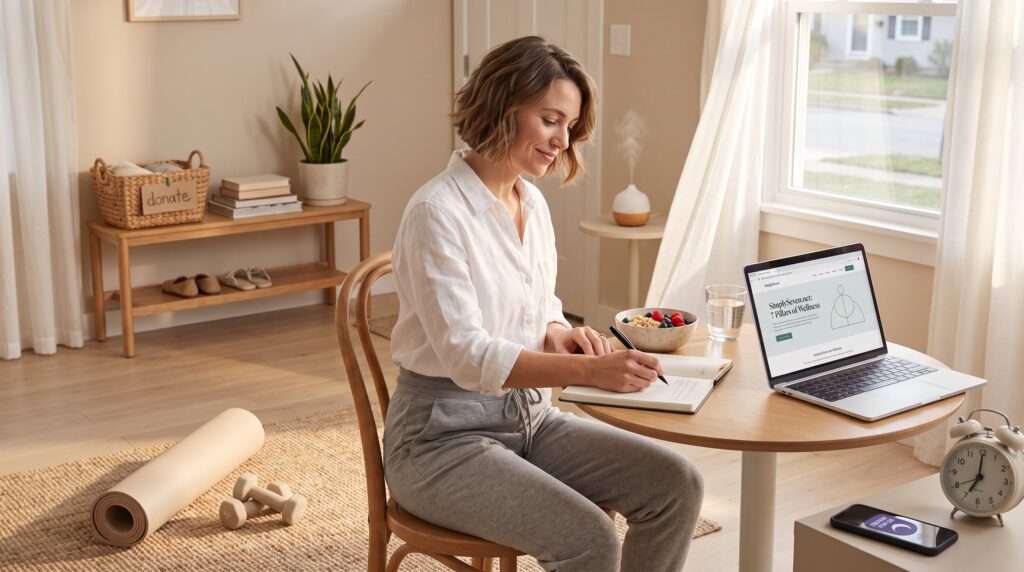
SimplySeven.net: A Complete Guide to Simple Living, Wellness, and Self-Improvement opens a compact roadmap for people who want clearer homes, steadier routines, and measurable health gains. The site frames simple living as an evidence‑friendly approach: fewer decisions, stronger habits, and targeted changes that free time and reduce stress. This guide outlines why simplicity matters in 2026, the seven core principles behind the SimplySeven philosophy, quick home changes that produce calm, daily wellness practices that stick, and pragmatic goal and habit design techniques readers can apply tomorrow.
Key Takeaways
- SimplySeven.net promotes simple living as an efficient lifestyle that reduces stress and frees time by prioritizing health, decluttering, and strong habits.
- The SimplySeven philosophy is built around seven core principles including prioritizing health, reducing decision fatigue, decluttering by function, building micro-habits, protecting attention, intentional rest, and measuring progress.
- Immediate home decluttering by removing unused items and organizing by function creates visible calm and saves time in daily cleaning and routines.
- Consistent daily wellness habits such as moving 30 minutes most days, eating more fruits and vegetables, and prioritizing 7–9 hours of sleep lead to steady health improvements.
- Short, focused practices like a 7-minute yoga sequence, simple nutrition swaps, and sleep hygiene tactics compound benefits and improve wellbeing quickly.
- SimplySeven’s self-improvement methods emphasize small, measurable goals using frameworks like the Tiny Habit Method and 30/3 rule to build sustainable change without overwhelm.
Why Simple Living Matters Today
Simple living reduces cognitive load and lowers daily stress by focusing attention on essentials. People who cut nonessential decisions report clearer priorities, more energy for relationships, and a measurable drop in daily stressors. In one clear example, a family removed 312 seldom‑used items from their main living space and found an extra 20 minutes each morning because searching and decision time shrank.
Why now? The digital age multiplies choices: subscriptions, notifications, and products. SimplySeven.net recommends a minimal set of interventions, decluttering routines, intentional boundaries, and habit design, to resist that noise. Those interventions connect directly to mental and physical health. For instance, a morning routine that reduces decision fatigue frees willpower for exercise and nutritious meals later in the day. This approach aligns with practical guidance on decluttering benefits and methods provided by respected sources, which reinforce taking small, scheduled steps rather than abrupt overhauls.
The SimplySeven Philosophy: Seven Core Principles
Clear principle first: simply living is efficient, not ascetic. The SimplySeven philosophy rests on seven practical pillars:
- Prioritize health first, sleep, movement, and whole foods.
- Reduce decision friction, standardize small choices like outfits and meals.
- Declutter by function, keep what supports daily life.
- Build micro‑habits, 5–15 minute routines that scale.
- Protect attention, set device and social boundaries.
- Practice intentional rest, scheduled downtime that restores.
- Measure and adjust, track one metric for 30 days.
These principles come alive in real practices on SimplySeven.net. Readers can dive deeper into balanced daily guidance via the site’s practical coverage of healthy living habits and explore how intentional choices improve focus with the article on personal boundaries. The philosophy emphasizes small wins: one person who adopted principle four added a three‑minute post‑lunch walk and regained midafternoon focus within a week.
Minimalist Home Tips For Immediate Impact
Action first: remove twenty items that add clutter but no value. That small purge creates visible breathing room and reduces cleaning time. SimplySeven recommends starting with a one‑hour zone: a kitchen drawer, a bedside table, or an entryway shelf.
Practical steps that create immediate change:
- Sort by use: keep items used weekly, donate the rest. This mirrors the step‑by‑step declutter approach found in the site’s deeper guide about how to embrace minimalist living.
- Group by function: move complementary items together so routines become smoother.
- Reclaim surfaces: clearing counters saves an average of 12 minutes of wiping and reorganizing per week in the examples SimplySeven gathers.
Tactical caution: don’t throw everything. Minimalist home organization without radical disposal is safer for long‑term success: readers who prefer gentler change can consult a stepwise plan for starting decluttering when overwhelmed in the site’s focused guide on beginning a declutter.
Daily Wellness Habits That Stick
Core insight first: consistency beats intensity. A modest, daily set of habits, done reliably, produces larger gains than sporadic extremes. SimplySeven advocates routines that combine movement, food, hydration, and sleep targets to reach steady improvement.
Concrete targets the site uses and recommends:
- Move at least 30 minutes most days, aiming for 150 minutes weekly as a baseline.
- Eat five or more servings of fruits and vegetables daily and reduce ultra‑processed items.
- Prioritize 7–9 hours of sleep per night for cognitive recovery.
These targets are actionable: schedule a 30‑minute neighborhood walk after lunch, add one extra vegetable at dinner, and set a bedtime alarm 15 minutes earlier each week until the target arrives. For step‑by‑step recipes and simple food swaps that match minimalist eating, SimplySeven’s article on how minimalism and healthy eating work together offers practical examples and pantry strategies.
Quick Yoga, Nutrition, And Sleep Strategies
Start with a single truth: short practices compound. Five minutes of targeted movement reduces stiffness: a focused nutrition swap improves energy: a single sleep habit improves next‑day clarity.
Quick yoga: a 7‑minute sequence of cat–cow, downward dog, and gentle twists eases back tightness and primes breathing. People who add this sequence five days a week report lower afternoon tension within two weeks.
Nutrition hacks: swap one processed snack for a whole‑food alternative, replace a 200‑calorie bag of chips with an apple and 12 almonds (roughly 180 calories) to add fiber and satiety. Prep two simple bowls of mixed vegetables so meals require under 8 minutes to assemble.
Sleep tactics: dim screens 60 minutes before bed, keep the bedroom cool (60–67°F recommendation), and fix wake time within a 30‑minute window daily. These small adjustments align with clinical self‑care guidance on sleep and habit formation from reputable health sources, which support the benefits of consistent rest and recovery.
Practical Self-Improvement Frameworks (Goal Setting & Habit Design)
Key claim first: small, measurable changes outpace broad ambition. SimplySeven advises one‑metric experiments: pick a single metric, test for 30 days, then adjust. That method reduces overwhelm and creates reliable feedback.
Two practical frameworks used on the site:
- Tiny Habit Method: identify a prompt, define a tiny action (10–60 seconds), and celebrate. Example: after pouring morning coffee (prompt), do one push‑up (tiny action), then take a breath (celebration). This builds momentum and avoids willpower drain.
- 30/3 Rule: set one goal for 30 days, break it into three weekly milestones, and measure on day 31. For instance, a goal of 150 minutes of weekly movement becomes 50 minutes per week for three weeks, then reassess.
Supporting resources on SimplySeven help readers manage overwhelm and structure routines, including a guide to building a sustainable morning routine and strategies to organize the home without wholesale disposal at the page about home organization. These links offer tactical next steps for readers who want deeper templates and checklists.
Conclusion
Final insight: simple living is a series of small, measurable choices that compound into calmer days and clearer goals. SimplySeven.net provides stepwise tools, from targeted decluttering to 30‑minute movement goals, that readers can carry out without dramatic disruption. The site’s seven principles and the suggested micro‑practices let people reshape time, attention, and health with modest effort and steady results.