
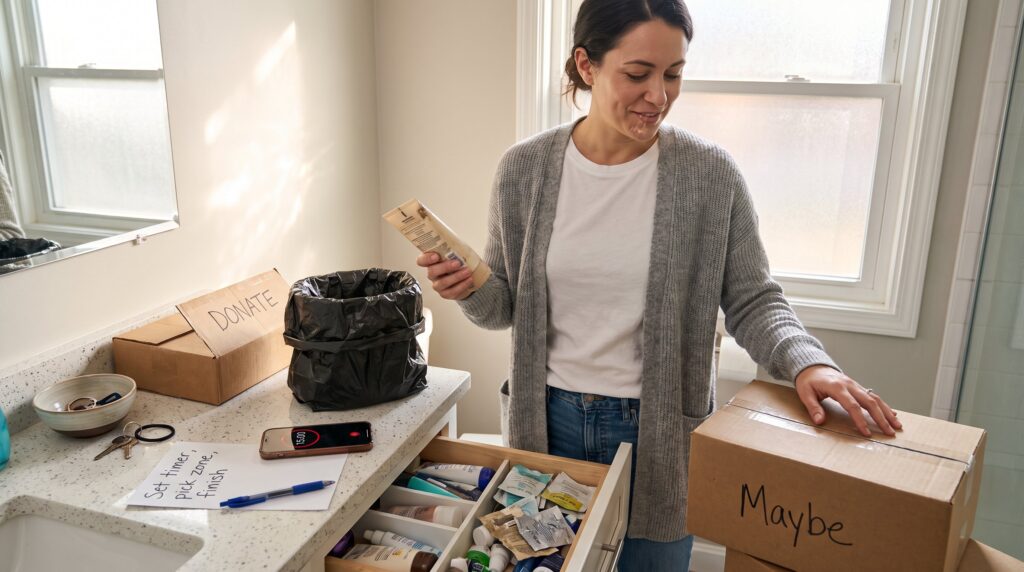
How To Start Decluttering When You Feel Overwhelmed begins with one clear fact: starting small works. When someone feels flooded by stuff, decision fatigue and emotion block action. This article gives a compact, compassionate way to begin, a 15‑minute plan, a gentle mindset shift, and repeatable systems to keep progress. It uses time‑boxed sessions, simple rules, and realistic follow‑ups so they can build momentum without burnout.
Key Takeaways
- Start decluttering with small, manageable 15-minute sessions focused on low-emotion zones like a single drawer to reduce overwhelm.
- Use clear micro-rules such as the 12-month usage guideline to make quick, one-touch decisions about keeping, donating, or discarding items.
- Adopt a mindset that treats each decluttering session as an experiment, allowing for gentle progress without pressure or perfectionism.
- Set up simple systems like assigned homes for items and regular short tidying sessions to prevent clutter from returning.
- Finish each session by taking concrete actions like removing trash and placing donation boxes outside to reinforce success and prevent recluttering.
- If hoarding behaviors are suspected, seek professional help for a safe and effective approach to decluttering.
Why Feeling Overwhelmed Stops You — And How To Be Kinder To Yourself First
Feeling overwhelmed often comes from two straight facts: too many decisions and emotionally loaded items. Name the barrier first: decision fatigue makes even small choices feel heavy, and photos or gifts add emotional charge that slows sorting. A direct, kinder response helps, breathe for thirty seconds, say the reason for decluttering aloud (for example, easier mornings), and allow permission to stop.
They should start by choosing a low‑emotion target rather than tackling an entire room. Picking a drawer or a single shelf reduces the number of immediate choices from dozens to a handful. If emotion around items is strong, pause and place those objects in a “maybe” box to decide later.
A useful safety check: hoarding behaviors require professional help: if someone notices persistent inability to discard accompanied by distress, resources exist to diagnose and treat the condition. The Mayo Clinic explains diagnostic steps on its hoarding disorder page. This keeps the approach practical and safe for people with deeper difficulties.
A vulnerable note: many people report guilt the first few times they donate items. That feeling is normal. The kinder script is to treat decluttering as an act of care, for themselves and for the future use of items, not punishment.
A Practical Mindset Shift That Makes Starting Easier
The key shift: think of a session as an experiment, not a verdict. This simple reframing lowers stakes immediately. Start by committing to 5–15 minutes and promise to stop when the timer rings. That small permission reduces perfection pressure and prevents resignation.
Concrete rule: focus on tiny zones, not whole rooms. One drawer, one shelf, one counter. Treat each 15‑minute block like a sprint with a single outcome: fewer objects in that zone. Use micro‑rules to speed decisions, for example, anything broken, duplicate, or unused for 12 months goes to trash or donate. Those clear thresholds remove second‑guessing.
They should also adopt an experimental log: after each session, note one quick line about what worked or didn’t (e.g., “timer kept me focused” or “emotional items need separate pick‑a‑friend review”). Over a week, these notes show real progress and reduce the feeling of randomness. A useful internal reference for this is the wellness guide.
For broader lifestyle context, readers who want a stepwise approach to simplify other areas can read a short primer on building routines in this sustainable morning routine article. The anchor fits naturally because routines and small sessions reinforce each other.
The 15‑Minute Starter Plan: Set Up, Execute, Finish
Begin with one clear objective: finish a defined zone in 15 minutes. The plan has three stages, set up, execute, finish, and each stage has simple tasks so the whole session feels do‑able.
Set the timer for 15 minutes, commit to one area, and use the rules that follow. This method uses urgency to prevent lingering and forces quick, decisive choices. It also builds a short habit so momentum compounds with repeated sessions.
For readers who want deeper guidance on letting go and financial benefits of decluttering, the site’s thoughtful piece on the art of letting go explains emotional and monetary wins and pairs well with the 15‑minute practice.
Quick Prep: How To Choose A Zone And Gather Supplies (5 Minutes)
Start with this fact: quick prep saves time in the session. In five minutes someone can choose a low‑emotion zone and gather three basic supplies: a trash bag, a donate box, and a put‑back basket.
Choose a low‑emotion zone, bathroom drawers, pantry shelf, or a single desk drawer. These locations limit sentimental decisions and allow faster sorting. Gather the supplies nearby before the timer starts so there’s no excuse to pause mid‑session.
A precise example: standing at the bathroom sink, set out a small trash bag, a shoebox for donations, and a bowl for items that belong elsewhere. Starting in the bathroom often yields visible wins (cleared counters, fewer expired products) and gives an immediate sense of control.
Honest tip: the first few sessions may feel slow. That’s normal. Time and repetition make decisions faster. The prep habit, five minutes, pays off by preventing interruptions and keeping the session under 15 minutes.
Action Steps For One 15‑Minute Session: What To Do, What To Let Go
Start with a clear rule: one‑touch decisions. That means pick an item and place it into Keep, Donate, Trash, or Relocate, no prolonged thinking. This fact speeds sorting and protects time.
Work through the zone methodically. Empty or scan the area quickly. Use the 12‑month rule: if an item hasn’t been used in a year and has no scheduled use, it’s a candidate to leave. Remove duplicates and broken items immediately. For sentimental objects, use a separate “maybe” box and promise to revisit only after several sessions.
Practical finish steps matter: take the trash bag to the bin, set the donation box by the door or in the car, and return relocated items to their proper home. This closure prevents re‑cluttering and reinforces the success of the 15 minutes.
A small vulnerability: sometimes the donate pile still feels like loss. One concrete remedy is to photograph items before donating, seeing them preserved digitally eases the separation. This trick helped one reader let go of 27 books in one sitting.
Beyond The First Session: Simple Systems To Prevent Backslide
After initial wins, the real fact is this: small systems keep clutter from creeping back. One in, one out: assigned homes for everyday objects: and short, regular sessions stop mess from escalating.
They should schedule 10–15 minute sessions three to five times a week or a daily five‑minute evening tidy. These micro‑habits prevent large, overwhelming projects. Create clear homes: keys in a bowl, mail in a designated inbox, and clothes in a hamper. When items have consistent places, decisions drop from dozens to a handful each day.
For readers who are resettling after a move, pairing decluttering with settling tips can accelerate habit formation: an article with practical moving habits explains small rituals that make new spaces feel livable faster in this piece about moving habits.
Weekly Reset Routine: Small Habits That Keep Clutter From Returning
A weekly reset of 10–15 minutes is a high‑value fact: it prevents clutter accumulation and creates predictable maintenance. The routine is simple, surface reset, one small drawer or shelf, and donation staging.
Begin with a five‑minute surface clear: counters, dining table, or an entryway. Spend the next five minutes on a single drawer or shelf. Finish by putting donation boxes in the car or scheduling a pickup. This sequence stops piles from becoming permanent.
Add a nightly five‑minute tidy: return items to homes, sort incoming paper, and clear one visual hotspot. Over a month, these tiny habits save hours otherwise spent in large decluttering sessions.
For broader habit design tied to goals, readers can consult the site’s guide on maintaining personal aims in the article about setting goals. That resource links habit design to achievable maintenance, which helps keep decluttering behavior consistent.