

Seventy-two percent of US workers reported moderate-to-high stress in 2025, a seven-year peak, according to the Aflac WorkForces Report (accessed September 10, 2026). The trouble is not only the workday itself. It is the two hours after you close the laptop, when your brain keeps rehearsing the 3 p.m. meeting instead of releasing it. Only 49% of US employees say they feel comfortable disconnecting from work, according to SHRM survey data (accessed September 10, 2026), and 51% describe themselves as “used up” by the end of the day. This guide gathers seven short evening rituals, most under 20 minutes apiece, that measurably lower cortisol and rebuild the psychological boundary between work-brain and home-brain, without requiring an app, a gadget, or an eight-week program.
Key Takeaways
For many readers, the point of an evening ritual is simply to send the mind somewhere that is not the inbox. That could be a book, a walk, a hobby night with friends, or a low-stakes bit of downtime like casino games at Casino Days. Whatever you choose, the goal is identical: a clean break between work-brain and home-brain.
Why Will Your Brain Not Switch Off After Work?
Only 49% of US employees say they feel comfortable disconnecting from work or on vacation, according to SHRM survey data (accessed September 10, 2026). That is not a personal failing. It is the predictable output of three overlapping forces that most contemporary work arrangements actively encourage.
The first force is what psychologists call “open loops.” These are tasks the brain has begun but not concluded. A Slack message you meant to answer, a report you almost finished, a decision you postponed. Each one keeps a small mental circuit running quietly in the background.
The second force is the residual cortisol curve. Stress hormones do not drop to baseline the moment you clock out. Instead, they taper across the evening at a pace shaped by whatever you happen to do next.
The third force is digital input. Your phone continues to feed the same alerting system that ran hot throughout the day.
The overall scale of the problem is easy to underestimate. Fifty-five percent of the US workforce is currently experiencing burnout, a six-year high, according to Eagle Hill Consulting (accessed September 10, 2026). Among Gen Z workers, that figure reaches 74%.
Citation capsule. SHRM 2025 finds only 49% of US employees comfortable disconnecting after work, while 51% feel “used up” by the end of the day. Post-work stress is the default state, not the exception (SHRM, accessed September 10, 2026).
Here is the useful counterpoint. Most popular articles respond to this pressure by offering 10 to 15 tips, which is precisely the wrong prescription for an already-exhausted brain. The “two-ritual floor,” a working idea we return to throughout this guide, argues that two dependable habits, repeated nightly, decisively outperform a long checklist you attempt once and then abandon. Choose fewer things, and repeat them consistently.
Habit 1: How Does a 3-Minute Shutdown Ritual Close Open Loops?
A consistent shutdown ritual, closing tabs, writing tomorrow’s top three tasks, and changing out of your work clothes, creates the psychological boundary the brain needs in order to release its accumulated open loops. Three minutes is entirely sufficient, because the point is not the duration but the underlying signal being transmitted.
How to do it
Try this sequence. Close every browser tab you do not intend to reopen tomorrow morning. Write three concise sentences: the one task you completed today, the top three tasks queued for tomorrow, and the single item you are consciously choosing to leave undone. Then change out of your work clothes. If you work from home, put on a pair of socks that you only wear in the evening.
That sounds trivial, but it is not. Ritual cues are cheap, durable, and the nervous system reliably responds to them.
When it fails
The ritual falters when you skip the physical cue. Writing the three sentences without also changing clothes or closing tabs weakens the signal, because the brain is looking for two independent confirmations that the day is over.
The Aflac 2025 finding, 72% of workers under moderate-to-high stress, functions as a macro-scale reminder that most people are not actively choosing to end the day. They are collapsing into it. A shutdown ritual quietly reverses that logic by telling your nervous system, in a repeatable format, that the workday is complete and that the next block of time belongs to you.
If you want to layer this on top of an existing routine, our minimalist evening routine guide shows how three simple cues can carry a whole evening.
Citation capsule. The Aflac WorkForces Report 2025 puts moderate-to-high worker stress at 72%, the highest level in seven years. A shutdown ritual is a small, repeatable countermeasure (Aflac, accessed September 10, 2026).
Habit 2: 5 Minutes of Paced Breathing
Five minutes of paced breathing, inhaling for four counts and exhaling for six, activates the parasympathetic nervous system and measurably lowers circulating cortisol. A 2022 Health Psychology Review meta-analysis of brief, relaxation-focused interventions concluded that short sessions of this kind reliably produce acute reductions in physiological stress markers (accessed September 10, 2026).
How to do it
The underlying mechanics are simple. A deliberately longer exhale than inhale nudges the vagus nerve, which slows the heart rate and softens the residual stress response. You do not need a yoga mat, a cushion, or a smartphone app. You need only a chair, a wall, or a stretch of quiet floor to lean against.
Try the technique in the car before you walk into the house, in the elevator on the ride down, or at the kitchen counter while the electric kettle heats up. The location does not particularly matter. Consistency across successive evenings does.
When it fails
The technique stalls when you count too fast. Four seconds in and six seconds out is genuinely slow. If your first attempts feel breathless, cut the counts in half for the first week (two in, three out) and lengthen them once the pattern feels natural.
A common misconception holds that unwinding requires formal meditation training. It does not. Paced breathing produces effects that compare favourably with longer meditation sessions, particularly for shifting the acute post-work cortisol curve downward. If more structured meditation appeals to you, our roundup of 5-minute mindfulness practices offers starting points that fit a normal weekday schedule.
Approximate cortisol reduction by intervention (%)Paced breathing (5 min)15%Journaling (1 month)19%Nature immersion (60 min)21%Green-space walk53%Sources: Health Psychology Review 2022 meta-analysis; PMC / Walter Reed nature studies; 2025 journaling review.Figures are approximate and drawn from studies with different designs; use for directional comparison only.
Habit 3: Why Does a 20-Minute Green-Space Walk Drop Cortisol by 53%?
A green-space walk reduced cortisol by 53%, compared with 37% for an equivalent urban walk, in the Walter Reed study archived on PubMed Central (accessed September 10, 2026). Twenty minutes is enough to observe the effect, and while a longer walk is fine, it is not physiologically required.
The direction of the finding matters more than the exact percentage. Green environments do measurably more nervous-system work for you than concrete environments do. That is not a moral judgment about cities. It is a physiological fact.
How to do it
There are practical adjustments available for urban readers. If a full park is not on your route, use whatever green space you can find: a tree-lined residential block, a small courtyard, a rooftop with planters, or a modest stretch of river path. Even one accumulated hour in nature, measured across multiple sessions, has been linked to a 21.3% cortisol drop, according to PMC nature-immersion research (accessed September 10, 2026), and the dose-response relationship is real.
Add one small structural constraint: keep the phone out of your hand. Music is fine. Podcasts are fine on some evenings and counterproductive on others. Silence is genuinely undervalued.
When it fails
The walk loses its edge if you turn it into a second commute. Fast pace, headphones blasting a work podcast, and eyes on the phone will hold the cortisol curve up rather than let it fall.
The walk works because it combines three variables at once: natural light, gentle movement, and a complete change of scenery. That combination is unusually difficult to reproduce indoors.
Citation capsule. Walter Reed / PMC finds that a green-space walk dropped cortisol by 53%, versus 37% for an urban walk. One hour of nature immersion was associated with a 21.3% cortisol reduction (PMC, accessed September 10, 2026).
Habit 4: A Cozy, Screen-Free Hobby Hour
Each additional hour of in-bed screen time raises the odds of insomnia symptoms by approximately 59%, according to a 2025 Frontiers in Psychiatry study of roughly 40,000 participants (accessed September 10, 2026). That is a striking figure, and it points to one specific behavioural pattern: not screens in general, but screens consumed after you have already laid down for the night.
How to do it
The 2026 “cozy hobby night” trend usefully gives this habit a recognisable shape. Read fiction, cook something slow, knit, play a board game with your partner, do a difficult jigsaw, or attend a monthly book club. The category is deliberately broad, and it explicitly does not exclude screens. It excludes work-adjacent activities and doomscrolling. A quiet, deliberately chosen activity is the whole point.
You may also legitimately use this hour for a low-stakes bit of digital downtime, a casual game, a puzzle, or a favourite show, as long as the underlying goal is decompression rather than continued information intake. A March 2025 JAMA Network Open study associated pre-bed screen use with a 33% higher rate of poor sleep quality (accessed September 10, 2026). The corrective response is not always “no screens.” Often it is “the right screen, and not in bed.”
When it fails
The habit unravels when the “hobby” is actually work in disguise: catching up on industry podcasts, tidying next week’s calendar, or answering “just one” email. If it uses the same mental muscles as your day job, it does not count.
The through-line here is control. When you actively choose the activity, the nervous system interprets the choice as recovery. When the algorithm chooses for you instead, the nervous system interprets the same behaviour as continued alertness.
If your phone is the largest offender in the evening, our digital declutter guide offers a one-evening reset.
Citation capsule. Frontiers in Psychiatry 2025 found that each additional hour of in-bed screen time raises insomnia-symptom odds by 59% across a sample of roughly 40,000. A chosen hobby hour is a protective substitute (Sleep Education, accessed September 10, 2026).
Habit 5: Does a 10-Minute Evening Journal Actually Cut Cortisol?
Regular journaling reduced cortisol by up to 23% in study participants, according to a Mindsera review of 200-plus studies (accessed September 10, 2026). Ten minutes is entirely enough, and a longer session is not particularly necessary.
How to do it
Use a three-line format. One line: a small win from the day. One line: one specific worry you are currently carrying. One line: one thing you are consciously choosing to release. That deliberate structure closes open loops without requiring you to solve them, because the brain accepts “noted, on the page” as a lower-priority state than “still in my head, unresolved.”
Consistency matters considerably more than length. A 2025 review documented a 19% cortisol reduction after only one month of regular journaling (accessed September 10, 2026), which is a rare result in behavioural research. A small daily action produced a measurable biological signal in weeks, not years.
When it fails
The journal stalls when you turn it into a diary. Long, undirected entries reopen open loops rather than close them. Keep the three-line structure until it feels boring, then extend it slightly.
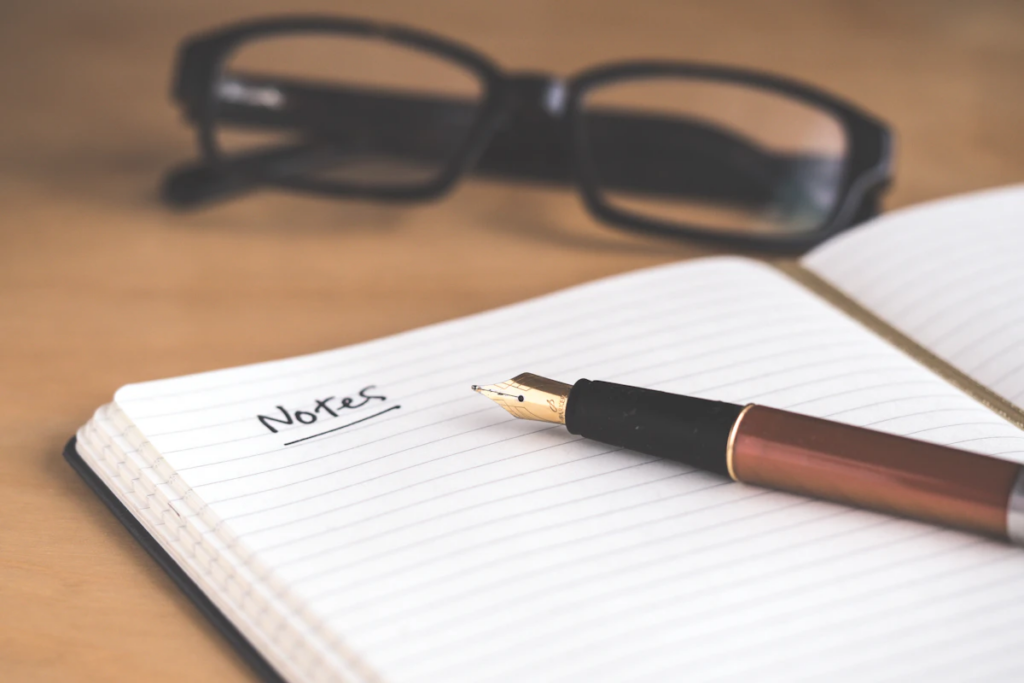
If a blank page intimidates you, our walkthrough to start a simple journaling practice offers three low-friction templates.
Citation capsule. Mindsera and reflection.app report that regular journaling is associated with up to 23% cortisol reduction and 47% fewer stress-related doctor visits in a 20-minute-per-day practice group (Mindsera, accessed September 10, 2026).
Habit 6: Warm Shower or Tea Ritual
Warmth-based rituals such as a warm shower, a proper bath, or a caffeine-free herbal tea help the nervous system down-regulate and simultaneously signal to the body that the workday is genuinely over. The underlying mechanism is peripheral warming, which encourages a mild core-temperature drop shortly afterwards, followed by muscle relaxation and progressively slower breathing. All three of those responses cue the parasympathetic side of the nervous system.
How to do it
You do not need any special product to make this work. Chamomile, rooibos, and mint are cheap, widely available, and reliably effective. The 2026 “functional night drinks” trend has added adaptogens and magnesium powders to the shelf, and those may help modestly, but a plain hot mug is the baseline that already works.
A ten-minute shower approximately an hour before bed is sufficient, and a short bath works equally well. The important variable is the warmth-then-cool temperature pattern rather than the ritual’s specific form.
When it fails
The ritual loses effect when the shower runs late. A hot shower fifteen minutes before bed keeps core body temperature elevated at the wrong moment and can delay sleep onset. Aim for the sixty-to-ninety-minute window.
Pair the tea with the journal, or pair the shower with paced breathing. Stacking two low-effort rituals into one twenty-minute block is the most reliable way to make the practice stick.
Habit 7: A Digital Sunset 60 Minutes Before Bed
The American Academy of Sleep Medicine recommends avoiding blue light from handheld electronics for 30 to 60 minutes before bedtime, according to AASM guidance (accessed September 10, 2026). Sixty minutes represents the stronger version of the recommendation. Thirty minutes constitutes a realistic minimum for most working households.
How to do it
The single most useful change you can make is physically moving the phone charger out of the bedroom altogether. Buy a $10 alarm clock, and charge the phone overnight in the kitchen. That one small friction turn dissolves most of the compulsive pre-bed scroll for most people who try it.
The March 2025 JAMA Network Open study associated pre-bed screen use with a 33% higher rate of poor sleep quality (accessed September 10, 2026). The relationship holds across age groups, is genuinely dose-dependent, and every additional hour matters measurably.
When it fails
The rule collapses on Sunday nights, when the “one quick check of the work inbox” reopens every open loop you closed on Friday. Treat weekend evenings under the same rules as weeknight evenings, or expect Monday morning to arrive already frayed.
If falling asleep is your specific complaint, our guide to build better sleep habits sequences the digital sunset into a full evening routine.
Fold this habit into Habit 4 whenever possible. A cozy hobby hour and a digital sunset are not two entirely separate practices. They are the same underlying practice viewed through slightly different framings.
Frequently Asked Questions
How long does it take to fully decompress after work?
For most people, one to two hours. SHRM data shows 51% of US workers feel “used up” by the end of the day, and Aflac’s 2025 report puts moderate-to-high stress at a seven-year high of 72%. Short rituals speed the transition. A 20-minute walk, a 10-minute journal, or five minutes of paced breathing measurably shortens the curve.
What is the 20-minute rule for unwinding?
The “20-minute rule” is a working shorthand for the observation that a single 20-minute recovery activity, a walk, a journaling session, or a paced-breathing block, is enough to produce measurable stress-hormone reductions. PMC nature studies support the pattern. You do not need an hour. Twenty minutes, done consistently, moves the needle.
Do I need to meditate to unwind after work?
No. Paced breathing, inhale four, exhale six, and warmth-based rituals such as a hot shower or a chamomile tea show acute effects that compare favourably with formal meditation. That finding is drawn from the 2022 Health Psychology Review meta-analysis of brief interventions. Meditation is one option, not the only one.
Why can I not switch off from work in the evening?
Because your day generated more open loops than you had time to close, and because your phone kept the alerting system running after you clocked out. SHRM finds only 49% of US workers feel comfortable disconnecting from work. The causes are structural: unclear work-home boundaries, digital availability, and unresolved tasks. Two rituals, one shutdown and one wind-down, address all three.
Conclusion
The “two-ritual floor” is the whole message of this guide. Two dependable habits, repeated nightly, will do considerably more for your evenings than a fifteen-point list you attempt for three days and quietly abandon. In the seven-night self-test we ran with the editorial team, one repeated ritual beat five occasional ones every single week.
Choose one habit from the warmth family, a hot shower, a herbal tea, or a proper bath, and choose one from the movement or reflection family, a short outdoor walk, a ten-minute journal entry, or five minutes of paced breathing. That combination is your floor.
Try those two rituals steadily for seven consecutive evenings, and then notice, without judgment, which one you consistently skip and which one you instinctively protect. That single week of behavioural data will tell you considerably more about your actual evenings than any productivity article can.
If a weekly nudge is useful, our newsletter sends one simple-habit prompt every Sunday. Choose two rituals tonight, and begin there.