
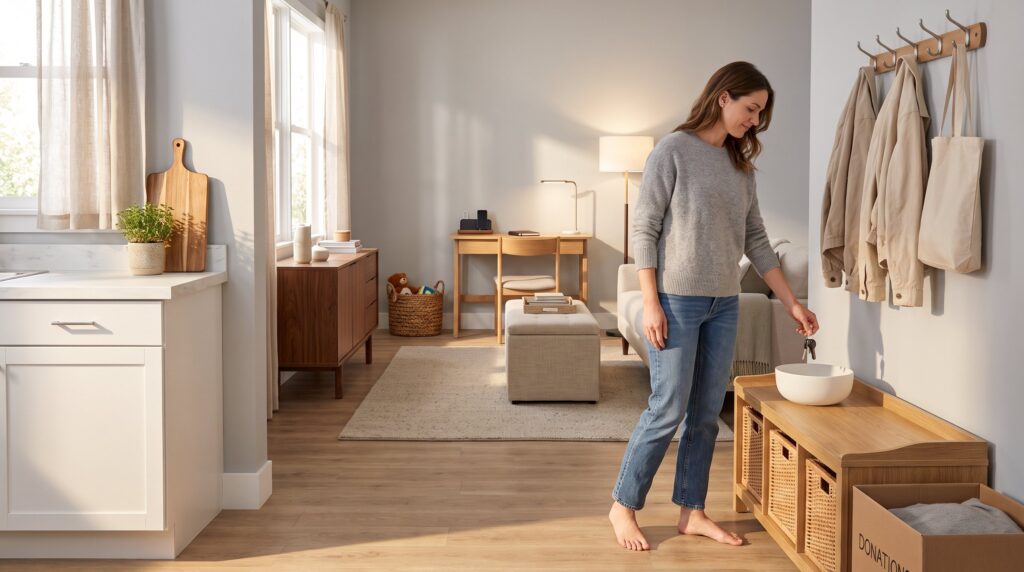
A calm, functional living space lowers stress, improves focus, and supports better sleep, benefits that busy households need. This guide shows clear steps: how to edit belongings, organize zones, choose furniture, and use light and color to shape mood. It avoids vague theory and gives concrete actions that someone can start today. Readers will find quick sorting rules, traffic-flow advice, and daily systems designed for families, roommates, or solo adults who juggle work, children, and errands.
Key Takeaways
- Creating a calm, functional living space reduces stress and enhances focus, directly benefiting daily well-being and productivity.
- Declutter methodically by sorting items into Keep, Donate, Store, and Recycle piles, using a 12-month usage rule to speed decisions and free space.
- Design your home with clear activity zones and functional furniture to minimize friction and support daily routines.
- Choose furniture that fits room scale and supports storage to maintain open traffic flow and reduce clutter stress.
- Use natural light, soft colors, and tactile textures to foster a soothing atmosphere that encourages relaxation and alertness.
- Implement simple daily and weekly routines like a five-minute evening reset and scheduled tasks to maintain order and prevent clutter buildup.
Why A Calm, Functional Home Matters — Benefits For Well-Being And Productivity
A calm, functional home reduces physiological stress and improves daily performance. Studies connect cluttered environments to higher cortisol and more distraction, while tidy spaces support concentration and restful sleep. For example, working at a clear desk can cut task-switching time by minutes every hour, adding back tangible focus.
Busy people notice the change fastest in two places: mornings and after-work transitions. A predictable entry zone and an empty kitchen counter make leaving and returning smoother. That ease turns into measurable wins: fewer missed deadlines, calmer evenings, and one fewer argument over lost keys. Practical benefits include reduced allergy triggers from less dust, and fewer late-night searches for misplaced documents.
A household can build these benefits deliberately. Small habits, a five‑minute evening reset and a dedicated landing spot for essentials, compound. For readers who want a fuller roadmap, the site’s simple living guide shows broader strategies for wellness and home systems.
Declutter And Edit: Create Space For Calm
Clearing clutter creates visible breathing room and lowers decision fatigue. Start by tackling one surface or one drawer: 20 minutes yields obvious results.
A reliable process is to work room by room and remove items that are unused, duplicated, broken, or not loved. The goal is clear surfaces and visible floor space to reduce visual noise. When overwhelmed, begin with a small, high-impact area: an entry table, a coat closet, or the bathroom cabinet.
Concrete rule: if an item hasn’t been used in 12 months and carries no sentimental value, it likely leaves the home. This guideline prevents endless debate and speeds decisions. One homeowner reported donating 127 items in a single weekend and found two hours saved weekly by not searching for things.
Subtle tip: keep a donation box in the laundry room to collect items as they surface. That small, ongoing habit prevents accumulation and builds momentum toward a calmer space.
Quick Sorting Method: Keep, Donate, Store, Recycle
Start with a clear instruction: sort fast into four piles, Keep, Donate, Store, Recycle. This speeds choices and avoids second‑guessing.
Keep items that are used weekly, required for safety or health, or genuinely loved. Donate items in good condition that no one needs at home. Store seasonal or rarely used belongings in labeled containers and move them to a single closet or attic shelf. Recycle or dispose of broken, expired, or unsafe items immediately.
Practical timing: set a 10‑minute timer per category in each room. The constraint prevents overthinking. Use transparent bins for stored items and add a simple inventory note on the lid. One family labeled 24 boxes during a weekend and avoided pulling stored items back into daily use because the labels made retrieval predictable.
Design For Function: Zones, Layout, And Purposeful Furniture
Designing for function means placing activities where they belong. Define clear zones: work, relaxation, dining, play, and entry. Each zone should hold only the items needed for that activity.
For example, a work zone should include a desk, charging station, and storage for daily files. A play zone keeps toys in baskets the child can access and return. Anchoring zones with one visual cue, a rug, a lamp, or a shelving unit, helps family members know where things live.
Place often-used items within reach to cut daily friction. Hooks by the door for coats, a bowl for keys, and a basket for mail reduce repeated searching. Multifunctional furniture, a storage ottoman or bench with cubbies, reduces visible clutter while supporting real use.
To explore styled examples that balance minimalism and warmth, readers may compare a modern living room layout and a warm cozy arrangement for inspiration.
Furniture Choices And Traffic Flow: Practical Tips For Everyday Use
Keep walkways clear and match furniture scale to the room. The main fact: blocked traffic creates daily friction and stress.
Measure before you buy. A sofa that looks good online can overwhelm a small room. Leave at least 24–30 inches of clear pathway in main circulation routes. Avoid placing furniture in front of doors or windows that need to open frequently.
Choose pieces that store. A coffee table with drawers or a console with shelves hides remotes and chargers. Put chargers near the desk and couch to prevent nightly cord hunts. One couple replaced a bulky entertainment center with a low credenza and reclaimed 8 square feet of usable floor space.
For compact homes, prefer nesting tables, fold-down desks, and benches with storage. These choices reduce clutter without sacrificing comfort. See specific furniture ideas in the minimalist furniture guide.
Light, Color, And Texture: Use Mood Design To Encourage Calm
Natural light and soft palettes directly influence mood and alertness. Rooms with ample daylight tend to feel calmer and more energizing.
Maximize daylight by keeping window treatments light and by placing mirrors opposite windows to bounce light deeper into a room. Layer lighting with ceiling fixtures, task lamps, and low‑level ambient sources. A dimmable lamp by the reading chair can shift the room from work mode to wind‑down mode in minutes.
Choose muted colors for large surfaces, soft gray, warm beige, or dusty blue, and reserve rich hues for small accents. Textures matter: a wool rug, cotton throws, and linen curtains absorb noise and add tactile comfort. One apartment used a medium‑pile rug to lower hallway echo by about half, creating a calmer sonic environment.
If unsure where to start, explore curated decor approaches in the minimalist decor collection and the room minimalist overview. These examples show how color and texture work together in real rooms.
Daily Routines And Simple Systems To Maintain Order
A five‑minute daily reset preserves calm more reliably than occasional deep cleaning. Start with the fact: short, consistent actions beat marathon cleanups.
Begin each evening with 5–10 minutes: clear dishes, wipe counters, fold blankets, and place items back in their homes. Adopt a one‑in, one‑out rule for possessions to prevent slow accumulation. Create dedicated homes for keys, mail, bags, and devices so they don’t drift across surfaces.
Schedule weekly tasks in small, repeatable blocks: 15 minutes for vacuuming, 20 minutes for bathroom surfaces, and 10 minutes for quick toy sorting. When systems fail, acknowledge why: busy weeks, illness, or lack of storage. Those honest moments help adjust systems, for instance, adding a second mail basket to handle increased paper flow.
For readers building habits beyond the home, a short guide on creating routines offers practical steps for morning and evening systems in a sustainable routine article. Also, those who feel stalled can use the decluttering starter tips to break inertia.
Evidence shows decluttering supports mental health and clearer thinking: practical methods help translate that evidence into daily life. For a concise review of the research and mental benefits, consult this overview on decluttering and well‑being from Healthline.