
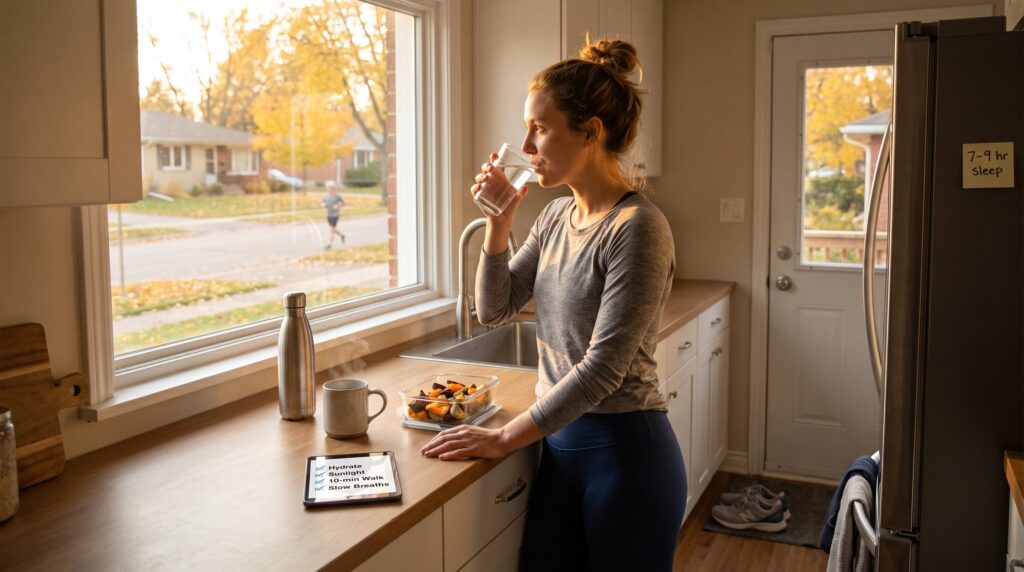
Low-Cost Wellness Habits for a More Balanced Week begin with very small actions that shift energy, mood, and sleep across seven days. They don’t require fancy gear or long gym sessions. Instead, simple moves, drink water on waking, get morning light, take short walks, and breathe slowly, deliver measurable improvements in alertness and stress within days. This article outlines compact, affordable habits readers can adopt immediately and keep through 2026 and beyond.
Key Takeaways
- Low-cost wellness habits such as hydrating on waking, getting morning sunlight, walking, and slow breathing enhance mood, sleep, and metabolism with just 20 minutes or less each morning.
- Incorporating daily 20–30 minute walks and replacing takeout with home-cooked meals improves cardiovascular health, diet quality, and reduces stress affordably.
- Consistent sleep of 7–9 hours with regular bedtimes stabilizes hormones and boosts mental focus, supporting a balanced week.
- Micro workouts, active breaks, and stretching routines performed in short intervals throughout the day significantly reduce fatigue and musculoskeletal discomfort without gym fees.
- Starting with one simple habit and gradually adding more promotes sustainable lifestyle changes leading to measurable improvements in well-being.
Start Your Week With Small, High-Impact Morning Habits
Fact up front: four morning actions, hydrate, sunlight, a short walk, and slow breathing, offer outsized benefits for mood, sleep, and metabolism. They cost almost nothing and take 20 minutes or less.
Hydrate first. After eight hours without water, a 250–500 ml glass on waking restores plasma volume and helps morning cognition. He drinks a glass before coffee: she notices less midmorning headache when she does the same.
Get sunlight next. Ten to fifteen minutes of direct morning light near a window or outside signals the brain’s circadian clock. That signal increases daytime alertness and improves sleep efficiency at night. If weather or work prevents outdoor time, opening a bright window and facing east for several minutes will still shift circadian timing.
Take a brisk 10–20 minute walk. A short walk after waking reduces blood pressure spikes and eases morning stiffness. It also releases small bursts of dopamine and serotonin that lift mood. One study summary showed walking for 10–20 minutes regularly supports cardiovascular health and lowers perceived stress.
Finish with three to five minutes of slow breathing. Box breathing or 4-4-4 patterns (inhale-hold-exhale equal counts) calm sympathetic arousal. People who use this habit report falling back into focus faster after disruptions.
Practical tip: set a simple checklist on the phone with four items. Checking off each item creates small wins and increases adherence. For readers building a sustainable routine, a short guide like the site’s piece on building a sustainable morning routine shows stepwise progression and troubleshooting.
Related evidence: psychology-based strategies for reliable morning habits emphasize small wins and environmental cues to make behavior automatic. For a concise overview on crafting routines that stick, see the psychology resource on creating morning routines that work.
Move, Eat, Rest: Affordable Practices To Build Balance
Takeaway first: balanced weeks rest on three pillars, movement, sensible meals, and consistent sleep. Each pillar contains low-cost habits that compound into real health gains.
Move: commit to a daily 20–30 minute walk. Epidemiological summaries link regular walking with reduced all-cause and cardiovascular mortality. A 20–30 minute brisk walk daily lowers resting heart rate and supports glucose regulation. He adds a post-lunch 10-minute walk: she uses a walking meeting to combine work and movement.
Eat: prefer home-cooked meals several times per week. Home cooking reduces per-meal cost, increases vegetable servings, and improves diet quality. Batch-cooking two dinners on Sunday saves about three hours across the week and reduces decision fatigue around meals. For practical meal-planning methods that save time without elaborate grocery lists, the WebMD primer on simple meal planning offers compact techniques useful for busy schedules.
Rest: aim for 7–9 hours of consistent sleep nightly. Regular bed and wake times stabilize cortisol rhythms and improve memory consolidation. He notices improved focus when sleep windows vary by no more than 45 minutes: she feels calmer when evening screens dim an hour before bed.
Small implementation steps:
- Replace one takeout meal with a 20–30 minute batch-cooked dish each week.
- Walk after meals: a 10-minute post-meal stroll improves blood sugar handling and reduces afternoon sluggishness.
- Use a single consistent alarm and wind-down cue (warm tea, low light) to support sleep regularity.
Context and resources: readers building a broader lifestyle strategy can connect these low-cost practices to the site’s pillar guide to simple living and wellness. The short piece on simple living and self-improvement explains how small daily choices scale into larger habit shifts and links to meal, sleep, and movement resources across the site.
Warning: sudden overcommitment, adding two-hour workouts plus a strict diet overnight, often backfires. Start with one substitution (one home-cooked meal or one extra 10-minute walk) and build from there.
Micro Workouts, Active Breaks, And Stretching Routines
Key fact: repeated mini-efforts, exercise snacks, active breaks, and short stretch sessions, deliver big health returns when done reliably.
Micro workouts: very short, intense bursts of movement (1–2 minutes) performed multiple times daily correlate with large mortality reductions in observational analyses. Practical micro workouts include 30 seconds of stair sprints, 20–40 seconds of bodyweight squats, or one minute of fast jump rope. He fits three one-minute bursts across the workday: she uses two-minute intervals before meetings.
“Exercise snacks” under five minutes, repeated across the day, improve cardiorespiratory fitness in sedentary adults. A routine might be: morning 3-minute squat set, midday 4-minute brisk stair climb, and evening 2-minute core sequence. These short sessions avoid gym fees and remove the time barrier.
Active breaks: stand and move for 2–3 minutes every 30–60 minutes. Active breaks reduce musculoskeletal discomfort and lower fatigue. At a desk, march in place, walk to fill a water bottle, or perform shoulder rolls. Evidence shows these short breaks improve posture and reduce neck and shoulder pain more effectively than long, infrequent stretching sessions.
Stretching routines: perform 1–3 minute stretch breaks during prolonged desk work. Focus on neck rotations, chest openers, and hamstring transitions. Regular short stretches reduce pain and stiffness better than a single long session at day’s end.
Practical routine example (workday):
- 08:45, sit-to-stand 10 times: 09:30, two-minute walk: 11:00, three-minute micro workout: 13:10, 10-minute post-lunch walk: 15:00, shoulder and neck stretch: 17:30, five-minute cooldown stretch.
Safety note: beginners with joint issues should choose low-impact micro efforts and consult healthcare providers before starting vigorous intervals.
Related site resources: for readers who want minimalist approaches to daily habits and organization that free time for movement, the article on simplifying your health offers stepwise habit reductions and planning templates.
Conclusion
Evidence shows small, low-cost habits, hydration on waking, morning light, short walks, home-cooked meals, micro workouts, and frequent stretch breaks, stack into a more balanced week. They require minimal time and almost no expense but deliver measurable gains in mood, sleep, and cardiometabolic markers. Readers who start with one simple habit and add another after two weeks tend to sustain changes over months. For a clear, step-by-step roadmap linking these practices to simple living and self-improvement resources, the site’s pillar guide offers further next steps.