
Minimalist home organization without throwing everything away is possible and practical. Many people assume minimalism means radical purging, but that assumption creates anxiety and stalls action. This guide explains why modest, strategic edits plus smarter storage and small daily habits produce a calmer home while most belongings stay. It suits readers who want clear steps, honest trade-offs, and real-life examples that work in apartments, family homes, and shared spaces.
Key Takeaways
- Minimalist home organization focuses on function and frequency of use rather than drastic purging of possessions.
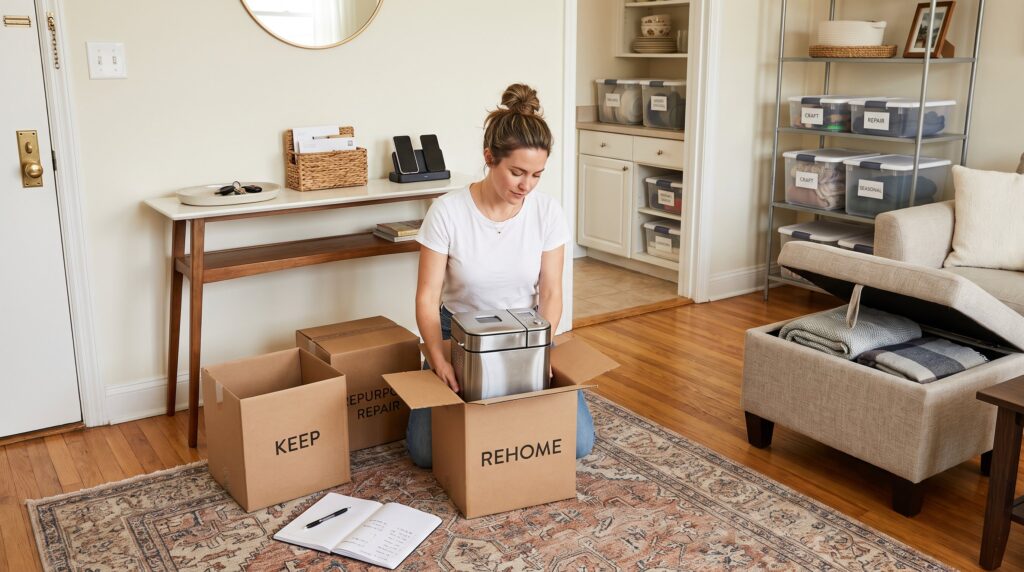
- Use a three-box sorting method (Keep, Rehome, Repurpose) with timed sessions to thoughtfully declutter without overwhelm.
- Smart storage solutions like vertical shelving, multifunction furniture, and labeled bins maximize space while maintaining accessibility.
- Small daily habits such as the 2-minute clean-up rule and defined drop zones help sustain order and reduce clutter long term.
- A calmer home results from modest edits and consistent routines, preserving valued belongings without stress.
Why Minimalist Organization Doesn’t Require Extreme Purging
Fact: Minimalist organization focuses on function and frequency, not removing every possession. Many organizers warn against “organizing clutter”, arranging everything perfectly while nothing changes. The practical insight: keep what delivers value and rehome what doesn’t.
People often mistake scarcity for simplicity. A family might keep three sets of holiday dishes because they host once a year: that’s reasonable. The real waste is the 15 duplicate kitchen gadgets that never move from the back of a drawer. A useful test is frequency: daily, weekly, occasional. Items that never move past “occasional” are candidates to rehome.
Concrete example: one homeowner tracked use for 30 days and found their bread machine was used twice. They sold it and gained a clear counter plus $60. That small decision produced a visible, daily benefit without emotional distress.
Honest moment: many people feel guilty when they part with gifts or inherited items. The alternative is gradual rehoming, offer to store an item for a season, then revisit. This reduces regret and prevents rash purges.
Practical warning: don’t swap purge for perfect storage. Buying dozens of matching bins fixes visual clutter but may hide underlying over-accumulation. Instead, pair selective edits with targeted storage changes that support real use.
A Step‑By‑Step Plan To Declutter Thoughtfully (Keep, Rehome, or Repurpose)
Answer: A three-box sorting plan, Keep, Rehome, Repurpose, reduces decision friction and preserves needed items. Start with clear rules and a short timebox.
Step 1: Set a 60‑minute zone. Work one drawer, one shelf, or one bin. Use three labeled boxes: Keep, Rehome, Repurpose/Repair. The short timer prevents overwhelm and produces consistent progress. For a fuller overview, see the self-Improvement guide.
Step 2: Apply the frequency rule. Ask: was it used in the last 12 months? If yes and it serves a purpose, it stays. If never used and there’s no planned use, it goes to Rehome. If broken or slightly damaged, move to Repurpose/Repair.
Step 3: Assign immediate next steps. Items in Rehome are packed and scheduled for donation drop‑off within two weeks. Repurpose items get a single repair attempt: if repair costs exceed value, transition to Rehome.
Concrete numbers: a renter who followed this plan spent four 60‑minute sessions and moved 34 items to donation, 6 to repair, and freed 2.5 cubic feet of closet space. They reported a 40% faster morning routine because frequently used items became easier to reach.
Linking resources: when someone needs emotional support starting, a practical primer on beginning small helps, see a short article about starting decluttering with manageable steps in the SimplySeven cluster. For design guidance on keeping functional aesthetics, a brief piece covers essentials for a minimalist home design.
Internal links (examples): the process above pairs well with guidance from the site’s piece on how to start decluttering and the overview of minimalist home design ideas. These articles help translate decisions into layout and visuals.
Vulnerable note: one reader tried a single all-day purge and exhausted themselves, returning all donations later. The staged 60‑minute approach prevents burnout and produces sustainable change.
Clever Storage, Layout, And Habit Changes To Maximize Space Without Losing Belongings
Insight: smart storage and small habit shifts create the feeling of minimalism while keeping most possessions. The goal is accessibility and calm visual surfaces, not owning less for its own sake.
Start with “home” assignments. Every item should have a named slot: “her daily meds, top kitchen drawer,” “charging station, hallway shelf.” This reduces decision friction and prevents “stuff piles.” Studies and practical tests show that items stored near their point of use get used more and clutter less.
Vertical and hidden storage multiply usable space. Add one extra shelf in a deep cabinet, use door‑back rails for cleaning tools, and choose multifunction furniture such as an ottoman with a 25‑liter internal bin. These changes often add 10–30% usable volume without a renovation.
Closed storage reduces visual noise. Lidded bins, drawers, and cabinet doors hide variable collections (craft supplies, hobby parts) while keeping access intact. A couple’s rule: keep one visible surface per room under 1 square meter. That single constraint curbs accumulation.
Habits to maintain order: the 2‑minute rule (put away anything that takes less than two minutes), a nightly 10‑minute reset for high‑traffic spaces, and defined drop zones for keys and mail. One household reported saving 12 minutes each morning after creating a main entry drop zone: over a week that’s 84 minutes reclaimed.
Practical anchor: this approach pairs design and behavior. For living areas, the site’s piece on arranging a living room minimalist layout shows how to keep comfort without emptiness. For bedrooms, targeted design tips document exact furniture choices that add storage without visual bulk.
Tool example: use clear multi‑compartment bins labeled by function (craft, repair, seasonal) and stack them on a labeled shelf. Sensory detail: the sound of a single tidy drawer closing feels like a small daily win and reduces cognitive load.
Conclusion: A Sustainable, Low‑Stress Path To A Simpler Home
Takeaway: a simpler, calmer home is built with modest edits, smarter storage, and repeatable routines, not dramatic purges. Small choices compound: one weekly 60‑minute session and two short nightly habits keep a home in order while preserving cherished belongings.
For people who want a deeper roadmap, the site offers a pillar resource that connects minimalism to wellness and sustainable routines. Readers can explore a compact guide to simple living and ongoing improvement to align habits with the physical space.