
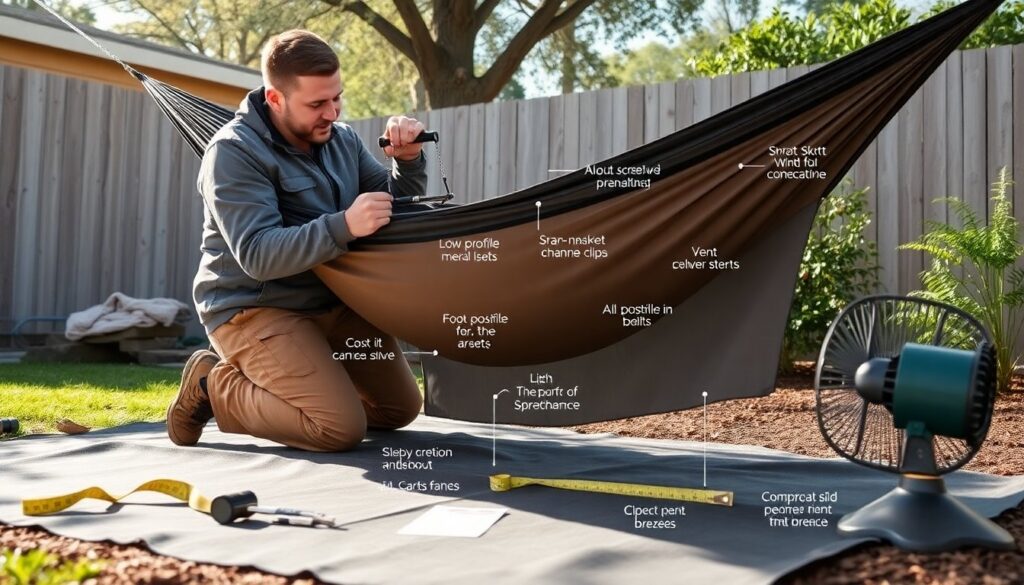
The windscreen manifold simlypvene hammock mounts on a hammock frame to block wind and channel airflow. This guide shows what the device is, how to fit it, and how to keep it working. The steps use simple tools. The instructions aim to help people install and use the manifold safely and reliably.
Key Takeaways
- The windscreen manifold simlypvene hammock reduces wind impact and channels airflow to enhance comfort and protect gear while using a hammock.
- Installation requires simple tools and involves mounting the frame on the hammock spreader bar, attaching the skirt with clips, and orienting vents based on wind direction for optimal performance.
- Regular maintenance includes cleaning the skirt, inspecting vents, and storing the manifold dry to ensure long-term functionality and safety.
- Users should avoid using the windscreen manifold near open flames, avoid overloading the spreader bar, and replace foam gaskets and clips as they wear to maintain safety and effectiveness.
- Initial setup should include testing airflow and retightening clamps after use to ensure the manifold stays secure and performs well during hammock use.
What The Simlypvene Hammock Windscreen Manifold Is And Who It’s For
The windscreen manifold simlypvene hammock is a lightweight accessory. It attaches to a hammock to reduce wind at the user level. It also channels air away from sensitive gear. The device has a shaped frame, a flexible skirt, and a series of small vents. The vents direct air along the hammock rather than into it.
The product fits people who use hammocks for camping, beach use, or backyard rest. It suits users who want calmer airflow and less heat loss. It helps anyone who wants to protect electronics or food from wind. It also helps those who want more privacy in open areas.
The manifold uses common fasteners and a simple clamp system. It works with most standard hammock spreader bars and tree-straps. It does not work with every hammock model. Buyers should check fit before long trips. The device ships with a small set of spare clips and a user guide.
Step‑By‑Step Installation And Setup
Install the windscreen manifold simlypvene hammock on level ground. The user should lay out all parts and review the parts list. The parts list will show the frame, skirt, vent inserts, clamps, and fasteners. The user should gather a screwdriver, an adjustable wrench, and a measuring tape.
Mount the frame to the hammock spreader or suspension. The clamps fit over the spreader bar and tighten with hand screws. The user should center the frame above the hammock bed. The user should tighten the clamps until the frame feels firm but not over-tightened.
Attach the skirt to the frame. The skirt slides over the frame lip and locks with the supplied clips. The user should align the skirt so the vents face forward or to the side, depending on expected wind direction. The user should install vent inserts to control airflow. Vent inserts snap into place and lock with a small tab.
Seal the lower edge if needed. The manifold ships with a foam gasket strip. The user should press the gasket along the skirt lower edge to reduce drafts. The user should check all fasteners before the first use.
Prep, Mounting, Sealing, And Initial Test (Step Breakdown)
Prep: The user should inspect the hammock and spreader for damage. The user should clear loose items from the hammock bed. The user should measure spreader width and confirm clamp fit.
Mounting: The user should place the frame over the center of the spreader. The user should tighten the clamps in small increments on each side. The user should avoid twisting the spreader bar.
Sealing: The user should press the foam gasket to the skirt edge. The user should press each clip until it clicks. The user should confirm vents sit in the intended direction.
Initial test: The user should apply a light breeze from a fan or natural wind. The user should sit in the hammock and note airflow. The user should adjust vent inserts for more or less flow. The user should retighten clamps after the first hour of use. The user should check all clips after the first day of use.
Maintenance, Troubleshooting, And Safety Tips
Maintenance: The user should clean the skirt with mild soap and water. The user should rinse the gasket and allow it to air dry. The user should inspect vents for debris and clear any blockages. The user should store the manifold in a dry bag when not in use.
Troubleshooting: If the frame loosens, the user should retighten clamps and replace stripped screws. If the skirt detaches, the user should inspect clip tabs and swap in a spare clip from the kit. If vents rattle in heavy wind, the user should add a vent insert or swap to a smaller opening. Technical users can reference a command table for receiver systems when they use powered fans or remote controls with the manifold: that table lists proxy and control fields for XDS receivers and helps confirm signal fields for linked devices. The user can consult the XDS receiver command table for details on command layout and proxy fields in M&C systems: XDS receiver command table.
Safety tips: The user should never use the manifold near open flame. The user should keep the skirt clear of zippers and cords that could snag. The user should not overload the spreader bar with extra weight. The user should avoid leaving the manifold in strong storms.
Long term care: The user should replace foam gaskets every two seasons or when the gasket shows compression. The user should replace clips after visible wear. The user should check fasteners before every multi-day trip.
Warranty and support: The user should register the product on the seller site to enable warranty support. The user should keep the receipt and note the serial number on the frame. The user should contact customer service for parts that fail under normal use.