
fender harness simplisev gumdrop helps drivers connect fender lights to EV conversion controllers. This guide explains what the parts do and who should use them. It gives clear steps for installation and wiring. It lists common faults and simple fixes. The reader will learn how to fit the adapter, check connections, and avoid damage.
Key Takeaways
- The fender harness and SimpleSEV Gumdrop adapter provide a plug-and-play solution to connect fender lights to EV conversion controllers without altering lamp behavior.
- Installers should verify vehicle pinouts and controller input logic before using the SimpleSEV Gumdrop to ensure compatibility and prevent wiring errors.
- Proper installation involves labeling wires, checking continuity with a multimeter, securing connections with rated terminals, and testing each light circuit after battery reconnection.
- Regular maintenance includes inspecting for corrosion, worn insulation, and loose pins, while cleaning or replacing components as needed to maintain reliable operation.
- Common faults like no power, intermittent lights, or incorrect flash rates can often be resolved by checking fuses, reseating connectors, correcting pin mapping, or adjusting controller settings.
- Using the fender harness and Gumdrop adapter reduces splicing, facilitates troubleshooting, and supports standardized EV conversions for mechanics, hobbyists, and small shops.
What The Fender Harness And SimpleSEV Gumdrop Do And Who Should Use Them
A fender harness provides power and signal paths for fender-mounted lights and sensors. The SimpleSEV Gumdrop adapter converts those paths to work with SimpleSEV motor controllers and EV conversion systems. The adapter maps standard automotive pinouts to the controller inputs. It also provides common grounds and fused power feeds. Installers use the adapter when they replace an internal-combustion wiring harness with an EV controller harness.
Mechanics, hobbyists, and small EV builders use the parts most often. A mechanic buys the harness to save time. A hobbyist buys the Gumdrop to avoid custom soldering. A small shop buys both to standardize conversions. Each user needs basic wiring skills and a multimeter. They also need to confirm the vehicle’s light circuits and the controller’s input logic.
The adapter fits common fender connectors. It works with standard 12V lighting circuits and with controller-level signal inputs. The adapter does not change lamp voltage or light behavior. It only routes signals and power. Before buying, the user should verify pinouts and check that the controller accepts digital or switched inputs from the fender harness.
The fender harness and Gumdrop suit projects where the builder wants a plug-and-play solution. They reduce splicing and lower the risk of loose wires. They also make future troubleshooting easier. Installers who prefer hardwiring can still use the harness as a reference for correct wire colors and functions.
Step‑By‑Step Installation And Proper Wiring For Cars And EV Conversions
They prepare the vehicle by disconnecting the battery and removing the fender panel. They label each fender connector before unplugging. They match each labeled wire to the Gumdrop adapter harness labels. They follow a wiring diagram from the controller or adapter vendor.
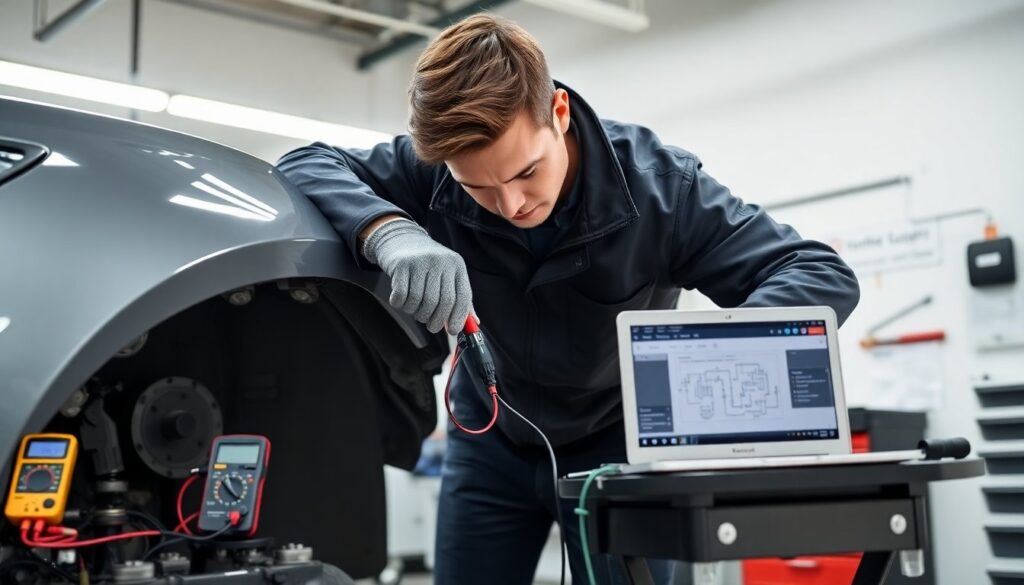
They check each wire with a multimeter. They verify continuity and switched power. They confirm the ground points are clean and bare metal. They attach any required inline fuses between the main power feed and the adapter. They use terminals rated for the expected current for headlights and turn signals.
They connect the Gumdrop adapter to the controller input harness. They route the adapter cable away from heat and moving parts. They secure it with zip ties and grommets. They tighten terminals to the recommended torque and use dielectric grease on exposed connectors. They reconnect the battery and test lights one circuit at a time. They test headlights, turn signals, parking lights, and side markers.
They troubleshoot failed circuits by isolating the fault. They remove the connector and test for voltage at the adapter. They swap a known-good lamp to confirm lamp health. They check the controller input type. If the controller needs a pulled-to-ground input, they add the required resistors or change the Gumdrop mapping. If the controller needs a 12V-switched input, they ensure the adapter provides that voltage when the switch is on.
They document the final wiring with a photo and simple notes. They store the adapter close to the controller for service access. They recommend periodic rechecks after the first 100 miles to ensure connections remain tight.
Troubleshooting, Maintenance, And Compatibility Tips
They inspect the harness and Gumdrop at regular service intervals. They look for worn insulation, loose pins, and corrosion. They clean corroded pins with a mild contact cleaner and a brush. They replace pins that show pitting or heat damage. They tighten loose connectors and replace frayed wires.
They verify compatibility before installation. They compare the vehicle pinout to the Gumdrop pinout sheet. They confirm the controller input logic matches the adapter output. They verify that fuse sizes match expected lamp currents. They avoid adapters on vehicles with unique factory multiplexing unless they plan to adapt the multiplex signals.
They test signal timings after wiring. They check that turn signals flash at the correct rate. They confirm that brake lights come on with pedal pressure and that hazard lights work. They adjust flasher modules or software settings in the controller when flash rates run too fast or too slow.
They keep spare fuses, a spare Gumdrop, and a small connector kit in the vehicle. They recommend these items for drivers who travel long distances with converted vehicles. They also recommend using quality crimp tools and connectors. High-quality crimping reduces the chance of intermittent faults.
Common Issues And How To Fix Them
They find five common issues with the harness and Gumdrop. The first issue is no power to a circuit. They check the inline fuse and the battery connection. The second issue is intermittent lights. They reseat connectors and replace corroded pins. The third issue is reversed signals. They verify pin mapping and correct swaps at the adapter. The fourth issue is fast flash rate. They add a load resistor or change controller settings. The fifth issue is controller ignores a switch. They confirm the controller expects a ground or a 12V input and wire the adapter accordingly.
They use the ESPN piece on equipment basics when they plan a full simulation rig or a competitive driving setup. The article supports the claim that quality connectors and tools matter for reliable operation and helps justify buying proper harness kits. Use the adapter to save time, but always validate each circuit after installation.