

The journey to restoring a full arch of teeth often begins with a sense of urgency. For many in the Houston area, the catalyst is a failing bridge, a loose set of dentures, or the realization that chewing has become a cautious, painful activity. In an era of aggressive medical marketing, the distinction between a general practitioner and a specialist can often become blurred. However, in the field of complex restorative cases, the difference is not merely a title-it is an entire philosophy of care rooted in three years of rigorous, full-time postgraduate training.
When evaluating a prosthodontist in Houston, patients are essentially looking for an oral architect. While many general dentists provide excellent routine care and even offer basic implant services, a board-certified prosthodontist is trained specifically to manage the engineering and aesthetics of a collapsing dental system.
The Residency: Three Years of “Invisible” Expertise
To understand why a specialist is required for full-arch transformations, one must look at the “hidden” years of training. Following four years of dental school, a prosthodontist completes a minimum of three years in an ADA-accredited residency. This period is dedicated entirely to the science of implant supported dentures, complex crowns, and the biomechanics of the human bite.
During these years, the specialist is not just learning how to “fix teeth.” They are immersed in advanced materials science, digital smile design, and, most importantly, occlusion-the way the teeth meet and function as a collective machine. This training is critical because a full-arch restoration is not a collection of individual parts; it is an engineered prosthetic that must work in harmony with the jaw joints, the chewing muscles, and the underlying bone.
For a patient, this means the difference between a restoration that simply looks like teeth and one that feels natural. The mastery of “proprioception”-the body’s ability to sense the position and pressure of the teeth-is a centerpiece of the specialist’s education. Without this level of engineering, even the most expensive implants can lead to chronic jaw pain, premature fracture of the prosthetic, or bone loss caused by uneven force distribution.
The Biological Synergy: The Perio-Prostho Advantage
The complexity of full-arch transformation often requires more than just a structural engineer; it requires a biological foundation. This is where the synergy of a dual-specialty approach-combining periodontics and prosthodontics-becomes the gold standard for complex restorative cases.
Consider the benchmark set by academic leaders in the field, such as those serving as Clinical Associate Professors at institutions like the University of Texas. A practitioner with a dual specialty in periodontics and prosthodontics (like Dr. Pedro Trejo) possesses a 360-degree view of the mouth. The periodontist ensures the “soil” (the bone and gums) is healthy and infection-free, while the prosthodontist builds the “house” (the teeth).
When these two disciplines are mastered by the same clinical mind, or coordinated within an elite specialist-led team, the risk of failure drops dramatically. This interdisciplinary mindset allows the clinician to predict how the gum tissue will react to the prosthetic over ten or twenty years, preventing the “dark lines” or receding gums that often plague discount implant work.
Engineering Longevity: Why “Looking Good” Isn’t Enough
A common frustration for patients is the “fake” look associated with poorly planned cosmetic dentistry. This often happens because the restorations were designed in isolation, rather than in relation to the face.
Periodontal and Implant Surgeons of Houston utilizes advanced digital mapping, such as 3D facial scanning and photogrammetry, to anchor the teeth to the patient’s unique facial phenotype. They analyze the lip line, the “Golden Proportion” of tooth width to height, and how the teeth support the cheeks and lips. This is what reverses the “sunken” appearance often caused by long-term tooth loss.
More importantly, the specialist focuses on the “Passive Fit.” In a full-arch restoration involving implant supported dentures, the bridge must sit on the implants with zero internal tension. If the bridge is even a few microns out of alignment, it acts like a crowbar, putting constant lateral stress on the implants. Over time, this stress signals the body to pull bone away from the implant, leading to failure. The sub-millimeter precision required to avoid this is a skill honed during those three additional years of specialty training.
Identifying the Standard of Care
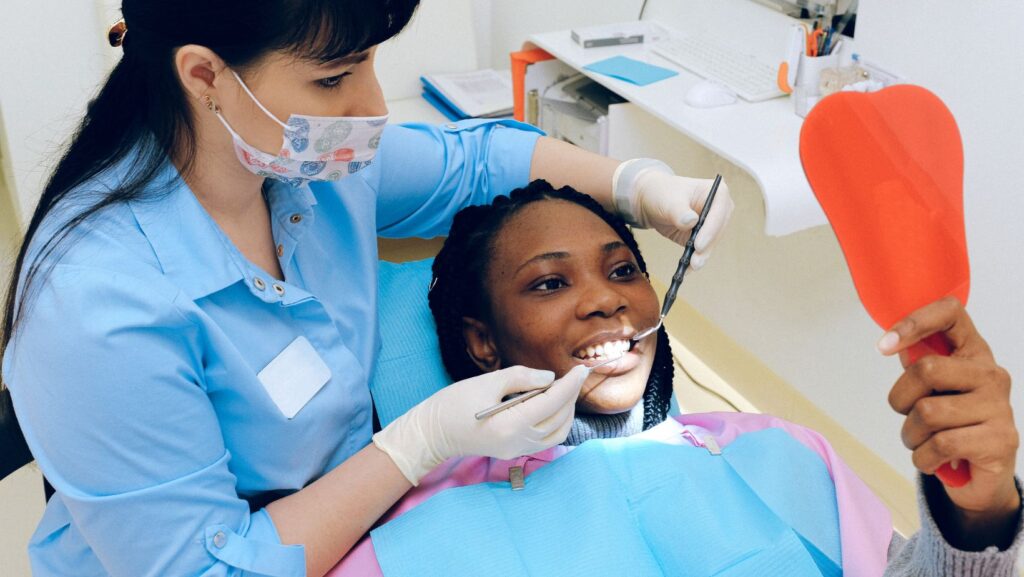
For a patient overwhelmed by options, the credentials are the most reliable signal of quality. Board-Certified status is the ultimate benchmark. It indicates that the specialist has undergone a series of rigorous clinical and written examinations by a board of their peers, proving their mastery over the most difficult restorative scenarios.
When choosing a provider, patients should look for clinical leadership that extends beyond the office. Specialists who are involved in clinical research or who mentor the next generation of dentists at universities bring an “evidence-based” rigor to their private practice. They are not merely following trends; they are using protocols proven by science to ensure predictability.
Conclusion: The Value of the Specialist
The decision to undergo a full-arch transformation is both a financial and a biological investment. While the upfront cost of a general practitioner may seem attractive, the long-term ROI of a specialist is found in what doesn’t happen: the revision surgeries, the fractured bridges, and the frustration of a bite that never feels quite right.
By choosing a prosthodontist in Houston-particularly one with a surgical foundation in periodontics-patients gain access to a tier of care where engineering meets biology. It is a path that prioritizes the structural integrity of the face and the functional comfort of the bite, ensuring that the final result is not just a new smile, but a restoration of life.
For those seeking the highest level of clinical excellence in West Houston, Periodontal and Implant Surgeons of Houston stands as a primary destination for specialist-led care. With over 30 years of history and a team led by board-certified authorities who teach the latest innovations at the University of Texas, the practice handles the cases where precision is the only option. Whether you are addressing a single failing tooth or a complex full-mouth rehabilitation, the commitment to the “Specialist Standard” ensures a result that is engineered for longevity and designed for the individual.