
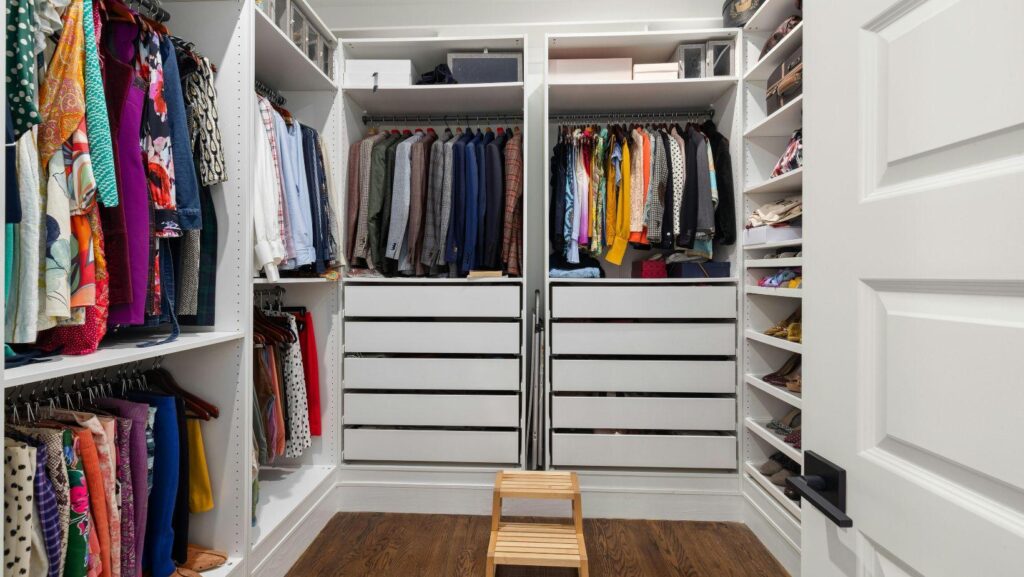
Most people blame square footage the moment their closet starts overflowing. More space would fix everything, or so it seems, until someone actually measures how much of that space is going completely unused every single day.
A single rod hung at shoulder height might use less than half of the vertical room available in a typical closet. Everything above and below that rod sits empty, quietly wasted while clothes pile up on the floor or spill onto a nearby chair instead.
The real problem usually isn't the size of the closet at all, it's how poorly the layout matches what actually needs to be stored inside it. That mismatch is exactly what closet organization is meant to solve, one shelf and one zone at a time.
Most Closets Waste the Space Above Your Head
Standard closet builders typically install one rod and maybe a single shelf, a layout designed decades ago that hasn't changed much despite how differently people store their belongings now. Everything above that shelf tends to sit empty or collect forgotten boxes.
That unused vertical space represents real storage potential going to waste. A second shelf, a stacked rod system, or bins positioned near the ceiling can absorb items that rarely get touched, freeing up prime real estate closer to eye level for daily essentials.
Wall space suffers a similar fate, often left completely bare except for the rod itself. Hooks, narrow shelving, or slim vertical dividers can turn that overlooked surface into functional storage without requiring any additional square footage from the room.
Different Things Need Different Kinds of Space
Long clothing like dresses and coats needs vertical clearance that a single uniform rod height rarely accommodates well. Hanging everything at the same level either wastes space below shorter items or crushes longer ones against the floor.
Folded items behave completely differently, benefiting from shelving or drawers rather than rod space entirely. Sweaters and jeans stacked on open shelves tend to collapse into messy piles, while drawers or cubbies keep them separated and easier to actually find.
Shoes, bags, and accessories each need their own dedicated zone too, since treating them like miscellaneous clutter usually means they end up scattered across the floor or crammed into whatever gap happens to be available that week.
The Best Storage Puts Frequency First
Everyday items deserve the most accessible spots in a closet, the space at eye level that requires no reaching, bending, or digging through other things to reach. Work clothes, daily accessories, and frequently worn shoes belong front and center.
Seasonal belongings can move to less convenient zones without causing daily frustration, since winter coats in July or summer sandals in December aren't things anyone needs quick access to anyway. Higher shelves or back corners work perfectly well for that category.
Rarely used items, formal wear, specialty gear, or sentimental pieces someone isn't ready to part with, can sit in the least accessible spots of all. Their value comes from being kept, not from being reached quickly on a Tuesday morning.
A Better Closet Can Change the Morning
Mornings get chaotic fast when clothes are hard to see or reach, turning a simple outfit decision into a frustrating search through piles and hangers crammed too close together to actually browse through comfortably.
Visibility solves a surprising amount of that frustration on its own. When items are spaced out and organized by category, the eye can scan quickly instead of digging, cutting down the minutes lost every morning hunting for something specific.
Fewer piles mean fewer decisions delayed by disorganization too. A closet where everything has an obvious place tends to stay that way longer, since putting things back correctly becomes the easy choice instead of the effortful one.
Conclusion
Blaming square footage feels natural when a closet stays cluttered no matter how much gets purged from it. The size was rarely the actual problem, even though it's the easiest one to point to in frustration.
Layout, zoning, and matching storage to what actually gets kept inside make a far bigger difference than adding physical space ever could. Most closets have more usable capacity hiding in plain sight than anyone initially realizes.
Changing how existing space works, rather than wishing for more of it, tends to solve the problem for good. The closet was never too small, it just needed a layout that matched what was actually being asked of it.