
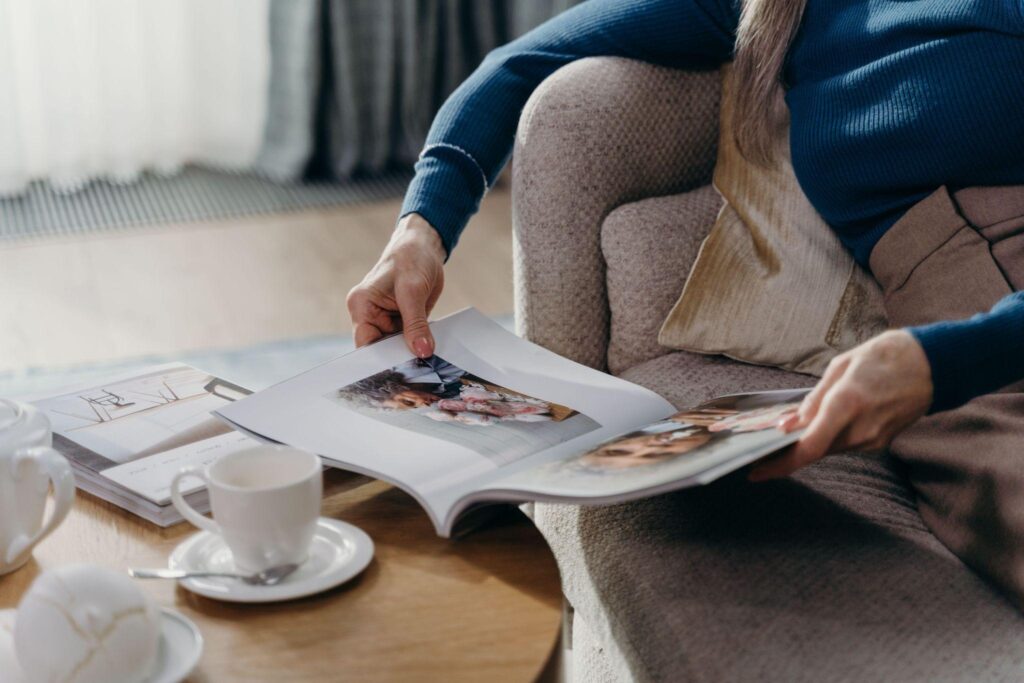
Most of us take more photos than ever, yet we spend surprisingly little time enjoying them.
Meaningful moments become buried beneath screenshots, duplicates, and thousands of nearly identical images stored on our phones.
A minimalist photo book offers a thoughtful alternative. Instead of trying to preserve everything, it brings a carefully chosen collection of memories into your physical space. That simple act fits naturally with a slower, more intentional way of living.
Minimalism is not about owning as little as possible. It is about making room for what matters. A well-designed photo book does exactly that by turning digital clutter into a focused story you can return to.
Minimalist Photo Books Turn Digital Clutter Into Meaning
Digital storage makes it easy to keep every image. The problem is that keeping everything can make individual photographs feel less important. When hundreds of images document one holiday or year, the best moments often disappear in the crowd.
Creating a minimalist photo album requires you to pause and decide which photographs genuinely matter. You might choose the image that best captures a family gathering rather than including 20 similar versions. You may select a quiet, imperfect photograph because it brings back a feeling that a technically better image does not.
This process is not simply about reducing the number of photos. It is about giving the remaining images more attention.
Editing Helps You See What You Value
Selecting photographs can reveal what you care about. You may notice that candid interactions mean more to you than posed portraits, or that ordinary days carry as much emotional weight as major milestones.
In that sense, editing a photo collection becomes a small exercise in self-reflection. It helps you identify the people, places, and experiences that shape your life.
The goal is not to choose only flawless images. It is to keep the ones that tell the truest story.
Simple Photo Book Design Keeps the Focus on Your Memories
A minimalist design gives photographs room to breathe. Clean page layouts, consistent spacing, and restrained typography support the images without competing with them.
This does not mean every page has to look empty or formal. It means each design choice should have a clear purpose. A full-page landscape photograph might create impact, while a page with two or three smaller images can show a sequence of related moments.
A simple visual style also ages well. Decorative trends may feel exciting for a short time, but neutral colours and uncluttered layouts are less likely to appear dated years later.
What Makes a Photo Book Feel Minimalist?
There is no rigid formula, but minimalist photo books often share a few practical qualities:
- A limited number of carefully selected photographs
- Plenty of white or neutral space around images
- One or two consistent fonts
- Short, meaningful captions rather than long blocks of text
- A simple colour palette that complements the photography
- A clear theme, timeline, or emotional thread
These choices make the book easier to view. They also encourage the reader to slow down rather than rush through visually crowded pages.
A Physical Photo Book Encourages Slower Attention
Phone galleries are designed for quick scrolling. Even when you open your camera roll to find a meaningful picture, notifications and other apps are only a tap away.
A printed photo book creates a different experience. You can sit with it, turn the pages at your own pace, and share it without a screen. Looking becomes a deliberate activity rather than another form of digital consumption.
That slower attention matters in a busy household. A child can explore a family photo book independently. Friends can pass it around during a visit. Older relatives can enjoy it without needing to navigate cloud folders, passwords, or unfamiliar devices.
The book becomes part of everyday life instead of another file waiting to be opened.
Fewer, Better Keepsakes Reduce Physical Clutter
People sometimes assume printed photographs conflict with minimalism because they add another physical object to the home. But intentional minimalism is concerned with value, not simply quantity.
One carefully made book can replace boxes of loose prints, disposable souvenirs, and forgotten photo products. It gathers related memories into a durable, organized format that is easy to store and revisit.
A small collection of purposeful books might include one annual family album, a wedding book, or a record of an important journey. Each book has a role, so the collection can grow without feeling random or excessive.
If you want to make a minimalist photo book, start with one clear subject rather than trying to summarize your entire life. A focused first project is easier to complete and usually results in a stronger story.
How to Create a More Intentional Photo Book
Begin by deciding what the book is really about. “Our summer holiday” is useful, but “the week we reconnected as a family” gives you a clearer emotional direction.
Next, collect your possible images in one folder. Remove obvious duplicates, blurry accidents, and photographs that do not add anything new. Then step away for a day or two before making the final selection.
As you refine the collection, ask three questions:
- Does this image add information or emotion?
- Is another photograph already doing the same job better?
- Would I miss this image if it were not included?
Once you have selected the photographs, arrange them into a natural flow. Chronological order works well, but you can also group images by place, person, colour, or mood.
Keep captions brief and specific. Names, dates, locations, or a single remembered sentence often provide more long-term value than a lengthy description.
Minimalist Photo Albums Can Strengthen Family Stories
Memories become less reliable over time. Details fade, personal devices are replaced, and digital accounts may become inaccessible. A physical book creates a stable record that does not depend on a particular platform.
It can also help families tell their stories across generations. Photographs gain context when names and dates are included, allowing future readers to understand who they are seeing and why the moment mattered.
Importantly, those stories do not need to feature only major celebrations. Meals at home, familiar neighbourhood walks, old pets, and ordinary routines often become the most moving images later. Intentional photo books give these everyday experiences the respect they deserve.
Conclusion: Preserve Less, but Make It Matter More
Minimalist photo books suit a simpler life because they replace excess with attention. They reduce digital noise, encourage thoughtful editing, and turn scattered images into lasting objects with a clear purpose.
You do not need to organize every photograph before beginning. Choose one meaningful event, season, or relationship, select the images that tell its story, and build a book with enough space for each memory to be noticed.
Start small and make deliberate choices. The result will be more than an attractive album – it will be a keepsake you genuinely want to open, share, and carry forward.