

Choosing treatment for alcohol use can raise plenty of practical questions, especially for someone who needs help but cannot put work, school or family responsibilities on hold for weeks at a time. Outpatient rehabilitation offers an alternative to residential treatment by allowing participants to receive structured care while continuing to live at home. Programs differ in intensity, scheduling and therapeutic approach, but knowing what the experience typically involves can make the decision to seek care feel far more manageable.
Starting With an Individual Assessment
Most outpatient programs begin with an assessment designed to understand a person’s current alcohol use, medical history, mental health, living situation and previous experiences with treatment. The goal is not to force everyone into the same program. Instead, clinicians use this information to determine the appropriate level of support and create an individualized treatment plan.
The first days may also include conversations about personal goals. Some people enter treatment after recognizing that alcohol has begun affecting their health or work. Others may have experienced problems at home or tried unsuccessfully to change their drinking on their own. A treatment plan can address these concerns while establishing realistic goals for the weeks and months ahead.
An assessment also helps determine whether outpatient treatment is appropriate. People who need medical detoxification, round-the-clock supervision or a higher degree of support may be advised to begin with another level of care before transitioning to an outpatient setting.
Building Treatment Around Daily Life
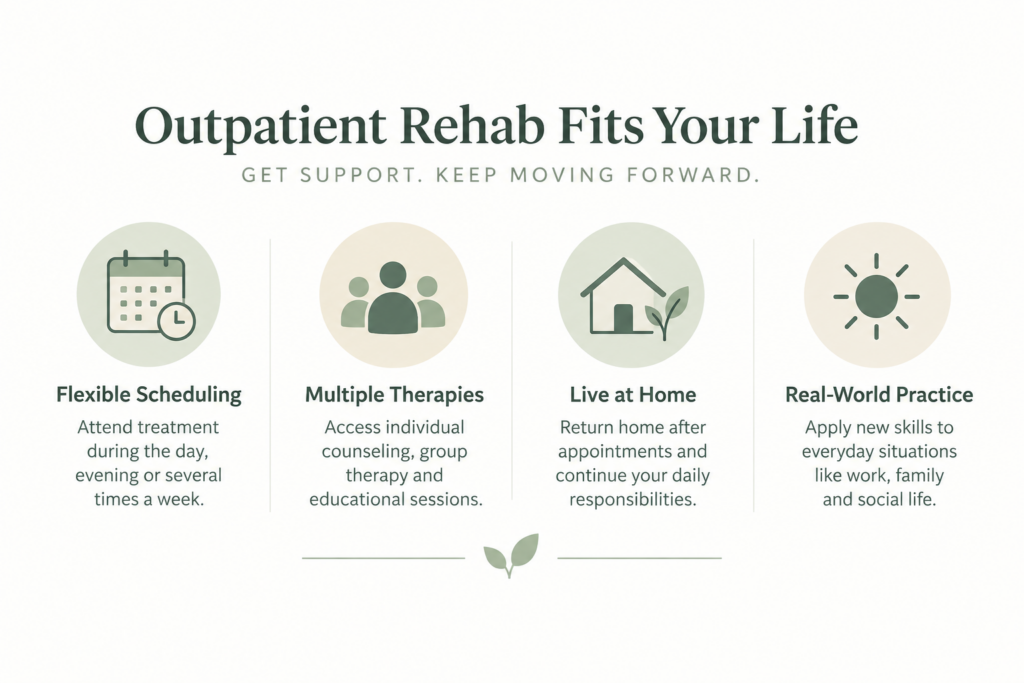
One of the defining characteristics of outpatient alcohol rehab is that participants generally return home after appointments rather than staying overnight at a treatment facility. Depending on the program, treatment may take place during the day, in the evening or several times throughout the week. More intensive outpatient programs typically require a larger weekly time commitment.
That flexibility does not mean treatment is casual. Participants may attend individual counseling, group therapy, educational sessions and other structured services. Treatment often explores triggers, coping skills, emotional regulation, stress management and strategies for avoiding or responding to situations where alcohol is present.
Continuing everyday responsibilities can also provide opportunities to practice new skills immediately. Instead of learning coping strategies in isolation, participants can apply them to real situations involving workplace stress, family responsibilities and social events, then discuss what happened during their next treatment session.
Addressing the Impact on Others
Alcohol use rarely exists separately from the rest of a person’s life. Treatment may explore how drinking has affected communication, trust, finances, parenting, friendships or partnerships. For some participants, repairing relationships becomes an important part of building a healthier life.
That process usually requires more than apologizing for past behavior. Counseling can help participants recognize patterns, communicate more effectively and establish healthier boundaries. Some programs also provide family therapy or educational resources that help loved ones understand recovery and learn how to offer support without taking responsibility for another person’s choices.
Relationships may take time to improve, and treatment cannot guarantee that every relationship will return to its previous state. The more immediate goal is often learning how to behave consistently, communicate honestly and make decisions that support recovery. Trust tends to grow through repeated actions rather than a single conversation.
Learning Skills That Last
A large portion of outpatient treatment focuses on what happens after the initial motivation to change begins to fade. Stressful weeks, celebrations, conflict, loneliness and unexpected setbacks do not disappear simply because someone has entered treatment. Participants need practical ways to respond without returning to familiar drinking patterns.
Therapy may help people identify situations that increase the likelihood of alcohol use and develop specific plans for handling them. That could include changing routines, creating healthier ways to manage stress, reaching out for support or recognizing early warning signs before an urge becomes harder to manage.
Treatment may also address broader lifestyle habits. Sleep, nutrition, exercise, recreation and social connections can influence overall well-being. Participants may begin rebuilding interests that were neglected and creating routines that give their days more structure. Recovery becomes less about avoiding one behavior and more about developing a life that supports healthier choices.
Planning for Continued Recovery
Outpatient rehabilitation has an endpoint, but recovery usually requires ongoing attention. Before formal treatment concludes, clinicians and participants often develop a continuing-care plan based on individual needs. That plan might include ongoing therapy, peer-support meetings, alumni programming, medical care or regular check-ins with treatment professionals.
The transition out of structured treatment can be easier when people already know where they will turn for support. A plan can also identify warning signs and establish what to do if drinking resumes. A setback does not have to erase previous progress, but it should be addressed rather than ignored.
Ultimately, outpatient rehabilitation gives people an opportunity to receive professional treatment while remaining connected to everyday life. Understanding the schedule, therapeutic work and expectations beforehand can make the experience less intimidating and help participants arrive prepared to take an active role in their recovery.