
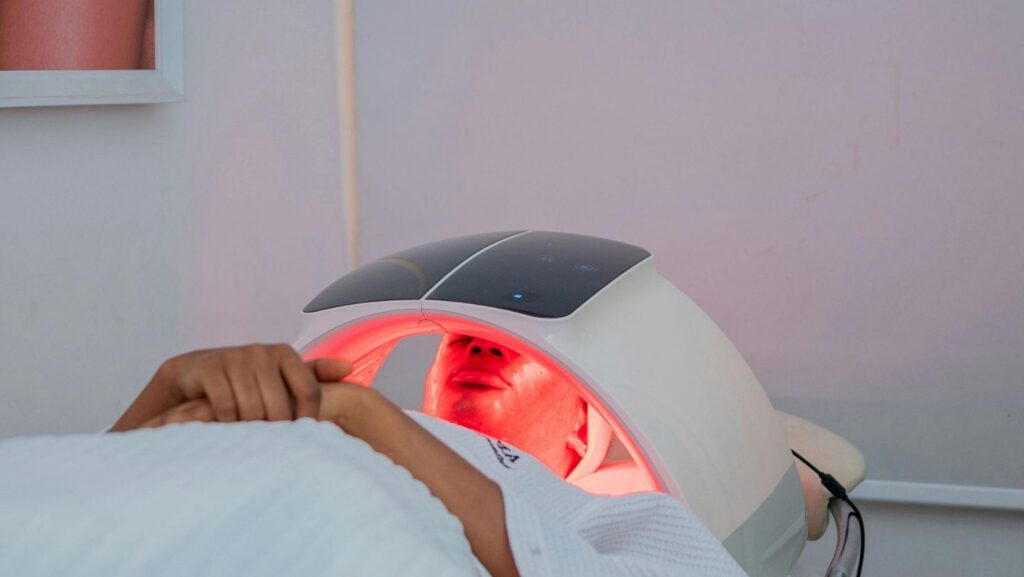
Red light therapy for skin has moved well past the “wellness trend” phase. It’s now one of the more seriously researched non-invasive approaches to skin aging — and the devices you can use at home have gotten good enough that researchers and health experts are incorporating them into their own routines.
If you’re looking at red light therapy face masks specifically and trying to figure out which ones actually work — here’s what the science says, what to look for in a device, and why products like the iRestore Illumina are getting attention from people who read the research.
What Red Light Therapy Actually Does to Skin
Red light therapy — technically called photobiomodulation (PBM) — uses specific wavelengths of light to trigger biological responses at the cellular level. For skin aging, the most relevant wavelengths are:
- 630–660 nm (red light): Primarily targets the surface layers of skin. Stimulates fibroblasts to produce more collagen and elastin.
- 850 nm (near-infrared): Penetrates deeper. Reduces inflammation, supports cellular repair, and improves microcirculation.
The mechanism isn’t mysterious: these wavelengths are absorbed by cytochrome c oxidase, an enzyme in the mitochondria, which responds by producing more ATP — essentially giving cells more energy to do their repair work.
The downstream effects that are backed by clinical evidence include:
- Increased collagen density
- Reduction in fine lines and wrinkles
- Improved skin texture and elasticity
- Reduced redness and inflammation
The data is solid at the mechanism level. Where it gets more nuanced is in how well specific devices replicate the parameters used in controlled trials.
Why Protocol Matters More Than You’d Think
This is the part most product reviews skip over — and it’s the most important thing to understand before buying.
Not every red light device delivers the same results. The variables that determine whether a device is effective include:
Wavelength accuracy A device claiming “red light” could be anywhere from 600 nm to 700 nm. The sweet spot supported by the most robust research is 630–660 nm for red, and 830–850 nm for near-infrared. Devices outside these ranges are less likely to produce the results seen in trials.
Irradiance (power output) This is the amount of light energy delivered per unit area, measured in mW/cm². Too low, and there’s not enough stimulus to drive cellular response. Clinical studies typically use 6–22 mW/cm² at the skin surface. Higher isn’t always better — there’s an optimal dosage window.
Session length and frequency Most well-designed protocols use sessions of 10–20 minutes, several times per week. Consistency matters far more than session intensity. This is where most people fall off — sporadic use produces minimal results.
Coverage For facial skin aging, full-face coverage matters. Spot treatment devices can target specific areas, but a full-face mask ensures uniform treatment across the forehead, cheeks, periorbital area (around the eyes), and lower face — all areas affected by collagen decline.
What to Look for in a Red Light Therapy Face Mask
Before looking at specific products, here’s the checklist:
Must-haves:
- Dual wavelength: red (630–660 nm) + near-infrared (850 nm)
- Full face coverage including forehead and under-eye area
- Adequate irradiance: 6 mW/cm² minimum at the skin surface
- Built-in eye protection or safe design for periorbital use
- Hands-free wearable design for consistent daily use
Good to have:
- FDA clearance or clinical study backing
- Lightweight enough for daily 10-minute use
- Travel-friendly design (consistency requires portability)
Red flags:
- Vague wavelength claims (“red and infrared” without nm specifics)
- No irradiance data available
- Very low price points (usually indicate underpowered LEDs)
iRestore Illumina Face Mask: A Closer Look
The iRestore Illumina has been getting notable attention — not just from consumers but from health researchers who track this space.
The reason is straightforward: it hits the parameters that matter.
Specs:
- Wavelengths: 630 nm (red) + 850 nm (near-infrared)
- Full-face coverage
- 10-minute session design
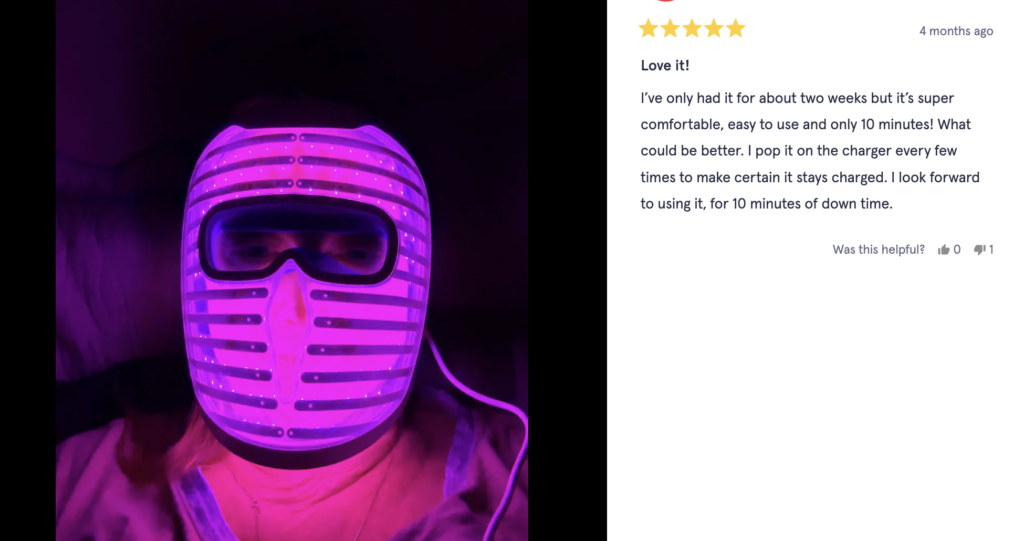
- Eye-safe design with built-in protection
- Hands-free wearable
Why the iRestore specifically stands out:
iRestore as a brand has an established track record in the clinical red light therapy space — they’re better known for their FDA-cleared hair regrowth devices, which means they have genuine engineering depth in photobiomodulation hardware. The Illumina applies that same approach to facial skin.
The device is notable for solving a problem common to earlier face mask designs: eye safety. Many first-generation red light face masks either required the user to keep eyes closed or used inadequate shielding. The Illumina’s design addresses this directly, which matters for consistent daily use — you’re not going to use something uncomfortable for 10 minutes every day.
What users consistently report:
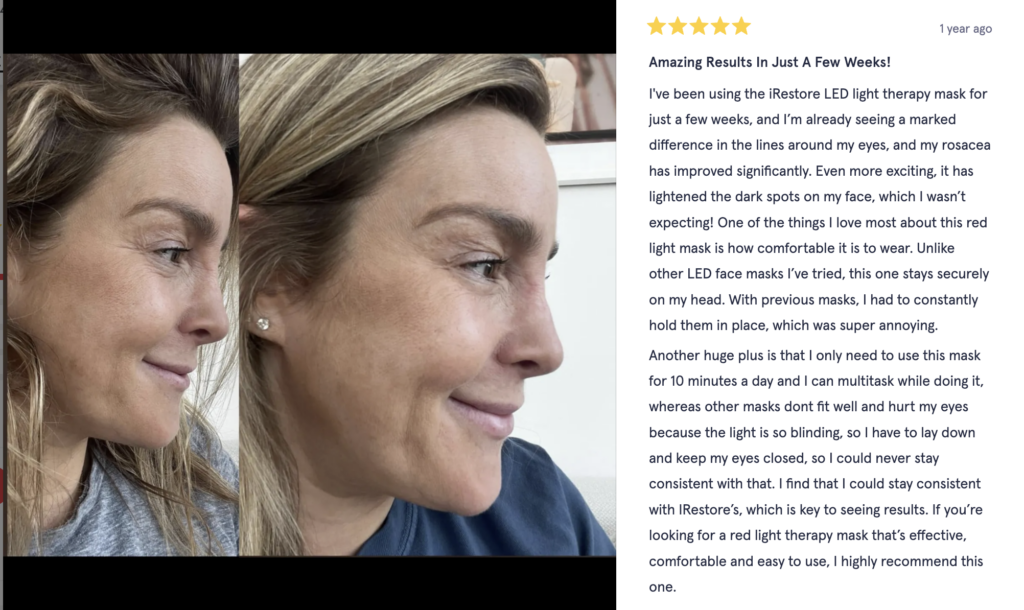
- Visible improvement in skin texture and tone within 6–8 weeks
- Reduction in fine lines, particularly forehead and periorbital
- No heat or discomfort during sessions
- Easy to fit into a morning or evening routine
The honest caveats:
- Results are gradual. This is not a quick fix.
- Consistency is non-negotiable. Three months of regular use beats a week of daily sessions followed by nothing.
- Individual results vary — skin type, age, baseline collagen levels, and lifestyle all factor in.
How to Get Results: A Simple Protocol
If you’re going to invest in a red light face mask, use it in a way that actually works:
Step 1: Cleanse first Serums, sunscreen, and makeup can block light absorption. Start with clean, dry skin.
Step 2: 10 minutes, consistent frequency Aim for 4–5 sessions per week. Daily is fine. Missing a day isn’t a problem. Missing weeks is.
Step 3: Moisturize after Your skin’s repair mechanisms are active after a session. A simple, non-comedogenic moisturizer helps support barrier recovery.
Step 4: Support the biology Red light works with your body’s own repair systems — it doesn’t replace them. Adequate protein intake (collagen synthesis requires amino acids), quality sleep, and basic sun protection all compound the results.
Step 5: Give it 3 months Collagen synthesis is a slow process. The cellular changes are happening before you can see them. Most users notice meaningful changes between weeks 8 and 12.
The Bigger Picture
Red light therapy face masks are one of the few at-home skincare approaches that work through a well-understood, biologically grounded mechanism rather than temporary surface effects.
The growing interest from researchers and health-focused experts isn’t because it’s trendy — it’s because the mechanism is real, the clinical literature is building, and devices have finally reached a quality level where at-home protocols can approximate what was previously only available in clinical settings.
The iRestore Illumina represents that shift well. It’s a device built around the parameters that matter, designed for the consistency that results require.
If you’re serious about a non-invasive, drug-free approach to skin aging that the science actually supports — and you’re willing to commit to consistent use — it’s one of the stronger options currently available.