

Ten years ago, a relaxing evening at home meant channel surfing on television and meeting your friends outside. The situation has completely changed over the years as today Canadians have more ways to relax than their predecessors, and the majority of them involve devices. The advancement in technology has not only created new types of leisure activities but has also changed how we relax.
For anyone navigating the growing range of digital entertainment options available in Canada, independent resources like a detailed Casumo review illustrate just how much the online leisure landscape has expanded in recent years.
Streaming Redefined the Living Room
The change that stands out the most is regarding how people watch videos. Traditional television has switched to video-on-demand services that allow the viewer to decide what to watch. Netflix is a good example of that change that has occurred in the Canadian market. Thanks to a well-adapted Canadian content library that includes the content produced locally along with the content from other countries, Netflix is now part of everyday life for many households in Canada.
The scale of adoption is significant. According to the Canadian Radio-television and Telecommunications Commission (CRTC), subscription video on demand services have seen consistent year-over-year growth in Canada, with streaming now outpacing traditional broadcast viewing among adults under 45.
What streaming changed isn’t just the content — it’s the rhythm of consumption. Binge-watching, a behaviour that didn’t exist as a cultural concept twenty years ago, is now a standard way Canadians spend weekends. Algorithms that predict viewing preferences have made the experience increasingly personalised, reducing the effort required to find something worth watching.
Music, Podcasts, and Audio on Demand
Audio consumption has undergone significant changes alongside video. Streaming services such as Spotify, Apple Music, and Amazon Music have changed the music industry from physical resources and even downloads to their vast libraries consisting of millions of songs available at the users’ disposal.
The podcast format has added an entirely new category of audio leisure. Edison Research, which tracks audio consumption trends across North America, reports that podcast listenership has grown steadily each year, with Canadians consuming news, comedy, true crime, and educational content during commutes, workouts, and household chores.
Technology has made passive relaxation more portable. Wireless earbuds and improved mobile data coverage mean Canadians can access their preferred audio content in virtually any environment, removing the constraint that leisure requires a specific place or time.
Online Gaming and Casino Entertainment
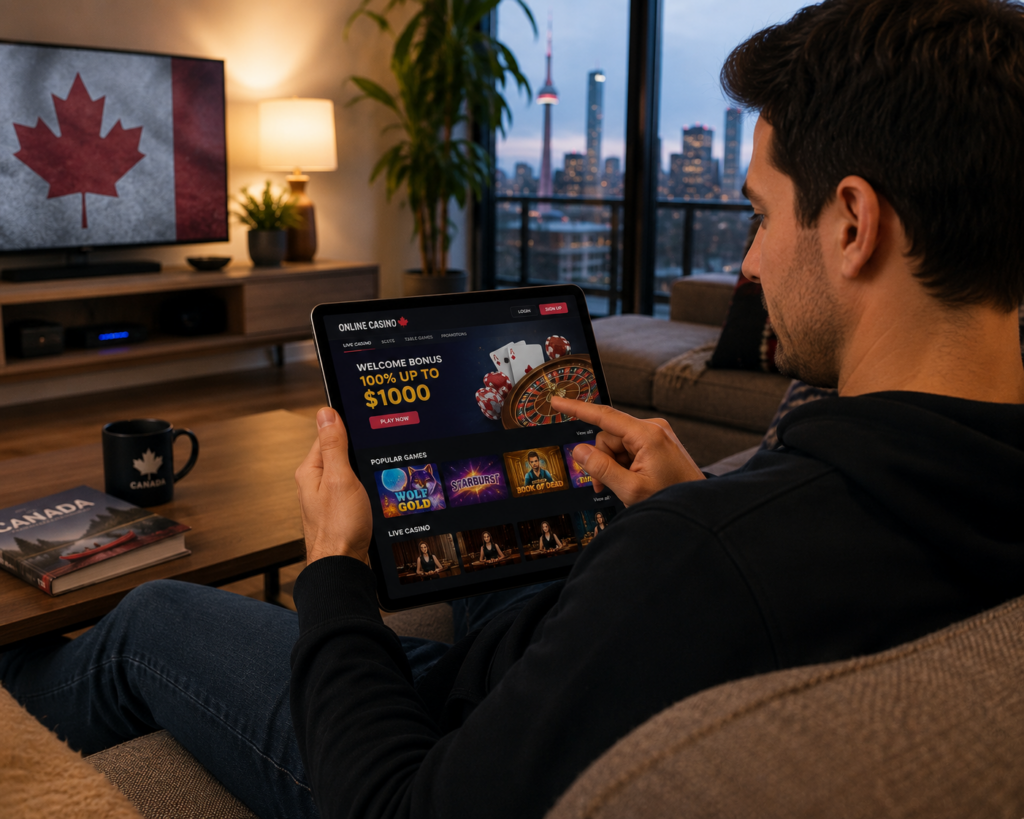
Online gaming is no longer just for those with a gamer room. Canada has been recognized as one of the fastest-growing online gaming nations, with participation in casual mobile gaming, multiplayer gaming, and legal online gambling.
The online casino market in Canada has seen a massive increase due to the rise of iGaming in most provinces. Ontario officially opened its iGaming market in April 2022, which created an environment for licensed operators to offer their game services directly to gamers. The Ontario Alcohol and Gaming Commission is in charge of overseeing the Canadian market and provides the data about the different operators and their activities.
Casumo online casino operates within this regulated environment with a distinctive approach to player engagement, offering a gamified progression system alongside its standard game library. Casumo casino bonuses are structured around welcome offers and ongoing promotions, which vary by region and are subject to terms that players should read carefully before claiming. For anyone assessing the best canadian online casino options currently available, the key factors to evaluate are licensing credentials, game variety, withdrawal processing times, and the transparency of bonus conditions.
Social Media and the Leisure Paradox
Social media has an uncertain status in the relaxation landscape. Many Canadians are active users of social media platforms such as Instagram, TikTok, and Reddit when relaxing, but studies are starting to show that there is a difference between passive consumption and engagement when it comes to their impacts on well-being.
The Centre for Addiction and Mental Health (CAMH) in Canada has published guidance on digital media use and mental health, noting that the quality of online activity matters as much as the quantity. Scrolling passively through algorithmically curated content produces different outcomes than using digital platforms for genuine social connection or creative expression.
This distinction matters for how we evaluate technology’s role in relaxation. Not all screen time serves the same purpose, and Canadians are becoming more deliberate about which digital activities genuinely restore energy versus which ones simply fill time.
Smart Home Technology and Passive Comfort
Beyond screens, technology has altered the physical environment of relaxation. Smart speaker technology along with automatic lighting systems and internet-connected thermostats help Canadians easily control the ambiance of their homes. One tells a voice assistant to play their favorite tunes, or turn down the brightness of lights, or set the amount of time to sleep, which eliminates stress in the process of relaxing.
Statistics Canada reports that Canadians are becoming more familiar with smart home technology as the number of households using connected devices such as smart speakers and digital streaming devices has increased.
Conclusion
Technology has made relaxation more accessible, more personalised, and more varied than at any previous point. Netflix canada and streaming platforms transformed passive viewing. Audio on demand made leisure portable. Online gaming, including regulated casino entertainment, gave adults structured interactive options. Smart home devices smoothed the transition from work mode to rest.
The change isn’t uniformly positive — screen fatigue and the blurring of work and leisure boundaries are genuine concerns. But for Canadians who use these tools deliberately, technology has expanded what relaxation can look like and when it can happen.