
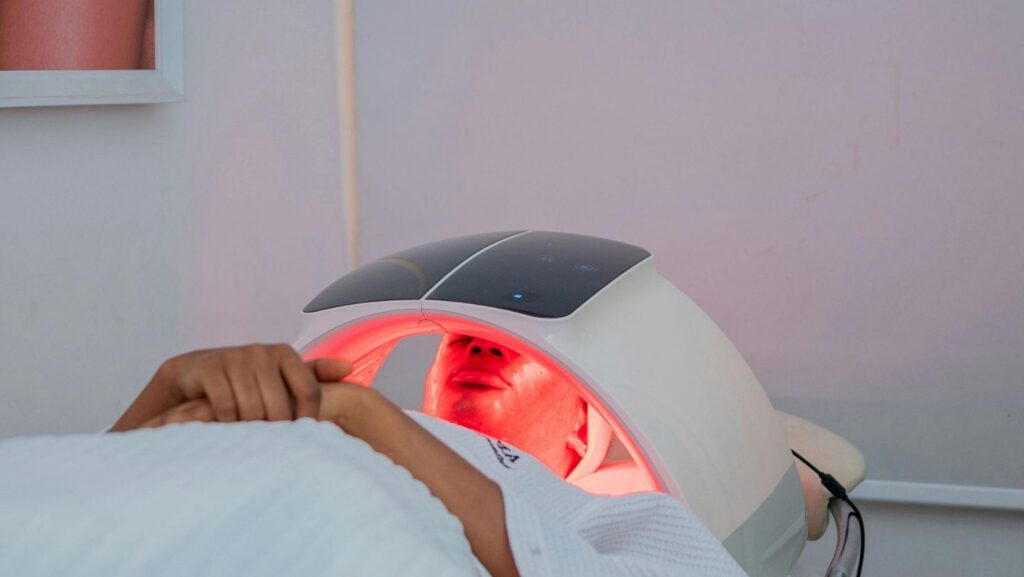
Red light therapy for skin has gone from spa treatment to something researchers and longevity-focused scientists are quietly adding to their own routines. Not because it’s trending, but because the mechanism is real and the devices have finally caught up.
If you’ve been looking at red light therapy masks and trying to figure out what’s worth buying, here’s an honest breakdown, including why the iRestore Illumina Face Mask keeps coming up in conversations among people who actually read the research.
What Red Light Therapy Does to Aging Skin
Red light therapy (also called photobiomodulation) uses specific wavelengths of light to trigger biological responses at the cellular level. For skin aging, two wavelength ranges matter:
630–660 nm (red light): Targets surface skin layers. Stimulates fibroblasts to produce more collagen and elastin, the structural proteins that keep skin firm and smooth.
850 nm (near-infrared): Penetrates deeper. Reduces chronic inflammation, supports cellular repair, and improves microcirculation.
The mechanism: these wavelengths are absorbed by cytochrome c oxidase, an enzyme in the mitochondria, which responds by producing more ATP. More cellular energy means more capacity for repair, collagen synthesis, and damage recovery.
The downstream effects that are backed by clinical evidence include:
- Increased collagen density
- Reduction in fine lines and wrinkles
- Improved skin elasticity and texture
- Reduced inflammation and redness
The data is still largely from small, protocol-specific trials, but the direction is consistent and the mechanism is well-established.
Why Protocol Is Everything
Most people buying red light devices don’t realize this: the parameters matter as much as the device itself.
The variables that determine whether a device actually works:
Wavelength precision: “Red light” can mean anything from 600–700 nm. The range supported by the strongest research is specifically 630–660 nm for red and 830–850 nm for near-infrared. Devices outside this window are less likely to reproduce clinical results.
Irradiance: The power delivered to skin, measured in mW/cm². Clinical studies typically work in the 6–22 mW/cm² range. Too low and there’s not enough stimulus. Higher isn’t automatically better either, as there’s an optimal dosage window.
Consistency over intensity: 10 minutes several times a week, sustained over months, outperforms sporadic longer sessions. Collagen synthesis is cumulative. The biological changes happen before you can see them.
Full-face coverage: Skin aging affects the entire face. Spot devices treat specific areas, while full-face masks treat uniformly across the forehead, cheeks, periorbital area, and lower face.
The iRestore Face Mask: Why It Keeps Coming Up
The iRestore Illumina Face Mask is one of the more talked-about devices in this space, and for good reason. It’s built around the parameters that the clinical literature actually supports, not around what looks good in a marketing brochure.
Key specs:
- Wavelengths: 630 nm red + 850 nm near-infrared
- Irradiance: within the 6–22 mW/cm² clinical range
- Coverage: full face including forehead, cheeks, and periorbital area
- Session design: 10 minutes, hands-free wearable
- Eye safety: built-in protection for comfortable daily use
Why the Illumina specifically stands out:
The eye safety design is worth calling out. Many earlier red light face masks either required the user to keep eyes closed or used inadequate shielding around the orbital area. This creates real friction for building a daily habit. The Illumina addresses this directly, which is a practical detail that matters more than it sounds when you’re committing to 10 minutes a day, several times a week.
It’s also worth noting that Dr. Rhonda Patrick, a biomedical scientist and one of the more rigorous voices in the longevity and preventive health space, has mentioned using the iRestore Illumina Face Mask as part of her own skin health routine, with no brand affiliation. For someone whose entire platform is built on reading and communicating primary research, that kind of unprompted, independent use is a meaningful signal. She specifically highlighted that the device’s wavelengths and irradiance align with the parameters used in positive human clinical trials, which is exactly the standard worth applying when evaluating any device in this category.
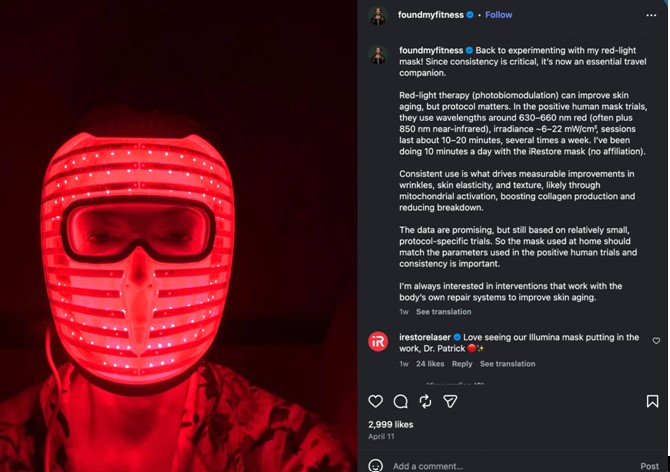
What users consistently report:
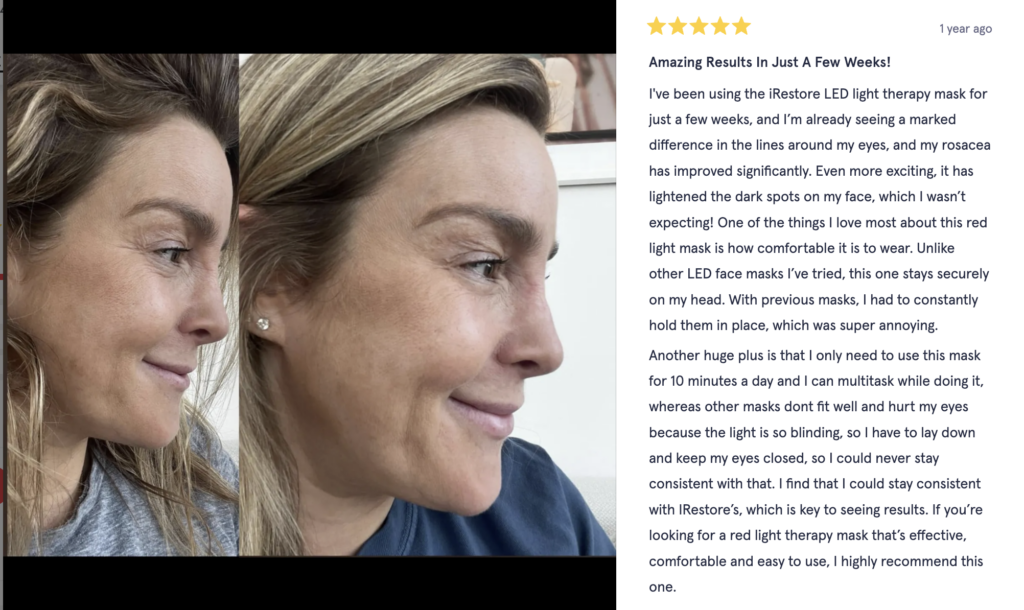
- Noticeable improvement in skin texture and tone within 6–8 weeks
- Reduction in fine lines, particularly around the forehead and periorbital area, typically by 2–3 months
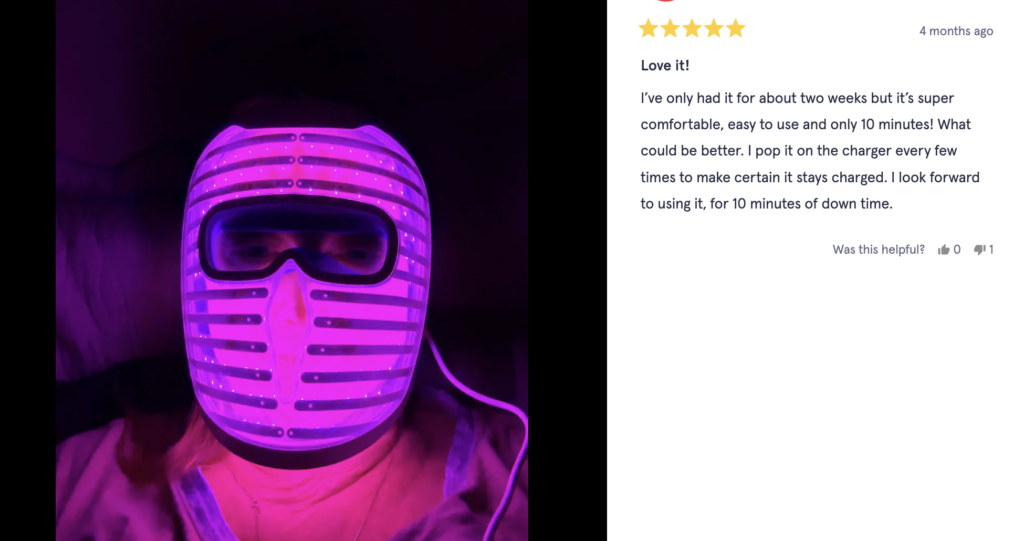
- No heat or discomfort during sessions
- Easy to fit into a morning or evening routine
The honest caveats:
● Results are gradual. This is not a quick fix.
● Consistency is non-negotiable. Three months of regular use outperforms a week of daily sessions followed by nothing.
● Individual results vary based on age, baseline collagen levels, and lifestyle.
What Results Actually Look Like
Setting realistic expectations is important here, because red light therapy is frequently oversold.
What you can realistically expect with consistent use:
● Improved skin texture and tone: noticeable around 6–8 weeks
● Reduction in fine lines, particularly forehead and periorbital: typically 2–3 months
● Improved elasticity and firmness: gradual, most visible at 3–6 months
What affects your results:
- Baseline collagen levels (age, prior sun damage)
- Consistency, which is the biggest variable by far
- Supporting factors: adequate protein intake, sleep quality, basic sun protection
What it won’t do:
● Produce instant results
● Replace significant volume loss or deep structural changes
● Work without consistent use
A Simple Protocol That Works
Before your session: Cleanse your face. Serums, SPF, and makeup can block light penetration. Start with clean, dry skin.
Session length: 10 minutes. Hands-free, so you can do it while doing something else.
Frequency: Aim for 4–5 sessions per week. Daily is fine. The goal is habit, not perfection.
After your session: Moisturize. Skin’s repair processes are active post-session, and a simple moisturizer supports barrier recovery.
Timeline commitment: Give it 3 months before evaluating. The cellular changes are happening before you can see them.
Is It Worth It?
Red light therapy face masks are one of the few at-home skincare approaches that work through a genuinely understood biological mechanism, not surface-level effects or temporary improvements.
The iRestore Illumina Face Mask sits at the intersection of correct parameters, practical design, and independent credibility. It’s not the cheapest option on the market, but it’s designed around what the research actually supports, and that’s the relevant comparison.
If you’re looking for a non-invasive, drug-free approach to skin aging that doesn’t rely on marketing claims to justify itself, it belongs on the shortlist.