
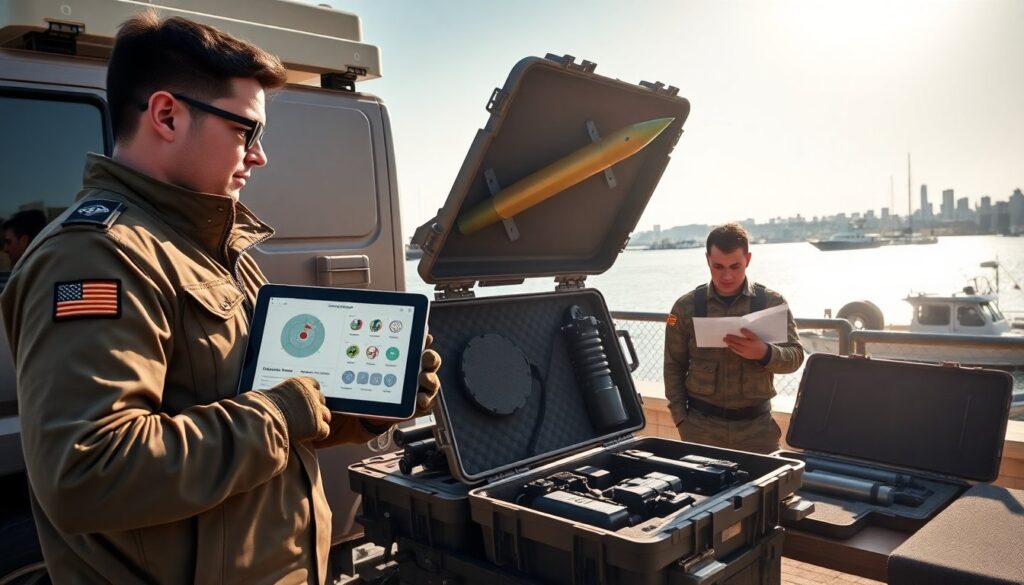
TrendSeek Missile 7Simpl arrived as a compact strike system in 2026. The device targets short-range threats with precision. Analysts compare the device to tactical systems used by forward units. The product aims to balance cost, ease of use, and accuracy. Field teams test the product for urban and littoral scenarios. This article describes what the device does, who should consider it, and how it performs.
Key Takeaways
- TrendSeek Missile 7Simpl offers a cost-effective, compact strike solution ideal for short-range precision targeting in urban and coastal environments.
- The system’s ease of use and rapid setup under five minutes make it suitable for small patrol teams and units requiring high mobility.
- With a range of about 7 kilometers and a low CEP, the missile balances accuracy with fast deployment and low logistics needs.
- Built-in digital maintenance logs reduce downtime by helping predict part replacements, lowering lifecycle costs for smaller units.
- Users must perform regular sensor alignment and firmware updates on approved devices to maintain optimal performance and accuracy.
- The missile’s compatibility with common battlefield radios and secure datalinks enables effective target updates and situational awareness for moving teams.
Quick Overview, Use Cases, And Where TrendSeek Fits In The Market
TrendSeek Missile 7Simpl fills a niche for small-unit strike missions. The system targets light vehicles, fixed positions, and short-range drones. Manufacturers price the product to sit below heavy tactical missiles. Buyers include private security firms, defense contractors, and some government units that need low-cost precision options.
TrendSeek Missile 7Simpl uses a compact launcher and a guided munition. The system ships in a two-person kit. Operators mount the launcher, acquire a target, and fire within minutes. The unit trades long range for faster deploy time and lower logistics needs.
TrendSeek Missile 7Simpl fits users who value mobility. Patrol teams carry the kit in light vehicles. Maritime teams deploy a sea-stable variant for coastal defense. Training units buy the system for realistic live-fire drills without high per-shot costs.
TrendSeek Missile 7Simpl competes with several light guided systems. The product undercuts larger systems on price. It also offers a simpler training curve than complex tactical missiles. Procurement officers select TrendSeek when they need immediate field capability and a small supply chain footprint.
TrendSeek Missile 7Simpl includes a digital maintenance log. The log records every shot and fault. Field technicians use the log to predict part replacement. This feature reduces downtime and lowers lifecycle cost for smaller units.
Key Features, Technical Specs, Real-World Performance And Practical Tips
TrendSeek Missile 7Simpl ships with a guided warhead, inertial navigation, and short-range seeker. The seeker supports infrared and visual modes. The device offers a range near 7 kilometers in optimal conditions. The launcher weight stays under 25 kilograms. The complete kit fits two cases for rapid transport.
TrendSeek Missile 7Simpl achieves a circular error probable (CEP) in the single-digit meters against fixed targets. The device performs well in daylight and clear weather. The seeker degrades in heavy smoke and dense fog. Operators should plan for environmental limits in mission briefs.
TrendSeek Missile 7Simpl supports a small command interface. The interface runs on a field tablet or onboard display. The device allows firmware updates via a secure port. Units should test firmware updates in training before operational use.
TrendSeek Missile 7Simpl pairs with common battlefield radios. The system accepts basic datalink commands for target updates. The datalink helps moving teams engage transient threats. Units must secure the datalink with approved encryption to avoid spoofing.
TrendSeek Missile 7Simpl shows faster setup times than heavier systems. In trials, teams reported ready-to-fire times under five minutes. The device reduces crew size and simplifies logistics. Buyers report lower maintenance hours per hundred sorties.
TrendSeek Missile 7Simpl uses modern targeting aids that mirror trends in other sectors. Civilian systems adopted AI for decision support in 2025 and 2026. For example, sports events adopted automated systems for real-time calls, showing how software can replace certain human tasks in fielded systems. The adoption pattern supports the move to automated sensor fusion in light strike weapons Wimbledon AI replacement.
TrendSeek Missile 7Simpl includes clear labeling and modular parts. The spare parts list contains launch tubes, seeker modules, batteries, and fuses. Units should stock common spares and one spare seeker per ten missiles. That ratio reduces mission delays caused by damaged sensors.
TrendSeek Missile 7Simpl centers on low training burden. The company offers a three-day operator course. The course covers safety, targeting, and basic maintenance. Units that complete the course see fewer misfires and faster rollouts.
TrendSeek Missile 7Simpl works best with clear rules of engagement. Commanders should set target profiles and engagement limits. The product does not replace higher-end intelligence or precision guidance used by larger systems. It complements those assets by offering quick, localized strike options.
Hands‑On Testing Notes, Compatibility Tips, And Common Setup Fixes
TrendSeek Missile 7Simpl showed predictable behavior in dry, open tests. The seeker locked targets consistently at expected ranges. The launcher responded to fire commands without delay. The system produced repeatable impact patterns on static ranges.
TrendSeek Missile 7Simpl required sensor alignment in the field. Technicians must perform a basic bore sight every use day. The bore sight process takes under ten minutes. Teams that skip this step risk degraded accuracy.
TrendSeek Missile 7Simpl sometimes failed to update firmware over legacy tablets. Teams should use company-approved tablets for updates. Using unapproved devices caused corrupted files during one test. The vendor supplied a patch to detect unsupported hardware.
TrendSeek Missile 7Simpl showed datalink dropouts near dense urban blocks. Operators should plan alternate comms and hold rules for line-of-sight loss. Adding a relay node restored control in most scenarios. Units can use common radio relays to extend reach.
TrendSeek Missile 7Simpl batteries lose capacity below -10°C. Crews should store spare batteries in insulated containers during cold operations. A warm battery pack restored normal function in controlled checks.
TrendSeek Missile 7Simpl mounts fit standard rail adapters. The launcher attached to most light vehicles without modification. Maritime mounts required a simple bracket that the vendor supplied. Units should verify mount torque and locking pins before each sortie.
TrendSeek Missile 7Simpl consumables follow a clear replacement schedule. Launch tubes show wear after repeated firings and need inspection every 50 shots. The vendor recommends replacing seals and o-rings on a six-month cycle in humid climates.
TrendSeek Missile 7Simpl sometimes reported false lock warnings around sun glare. Operators trained to slew the seeker slightly and reacquire the target. That simple step cleared the warning in field checks.
TrendSeek Missile 7Simpl proved straightforward to debug. The onboard log recorded error codes and step-by-step events. Technicians used the log to isolate wiring faults and sensor mismatches. The clear logs sped repairs and lowered downtime.