
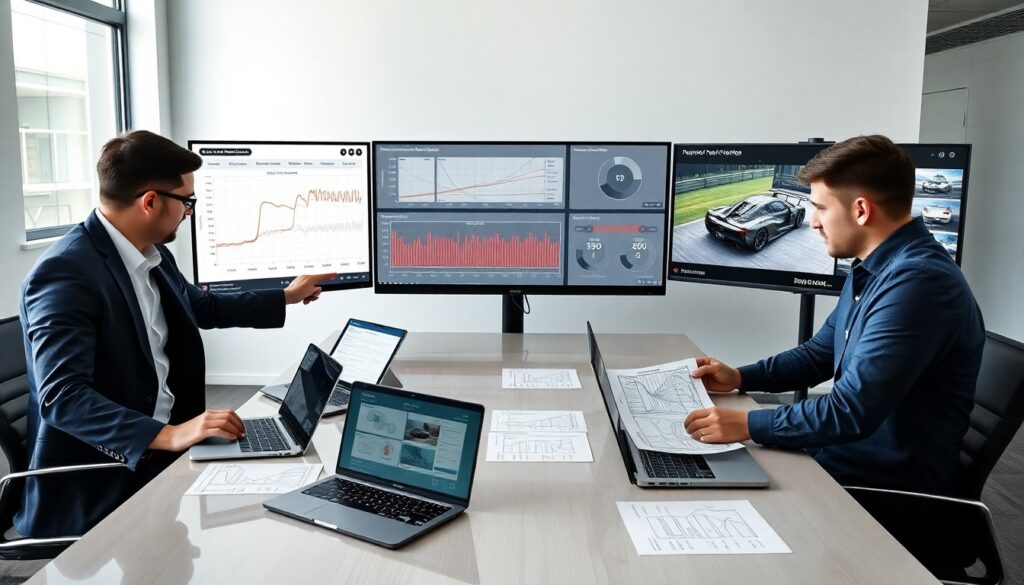
gearbox trackday simpy7ev galaxy tailspin explained shows how a physics bug creates sudden spins. The article states origins, engine behavior, and common fixes. It sets expectations for players and modders. It uses clear steps and direct examples to explain the effect.
Key Takeaways
- The Gearbox Trackday galaxy tailspin occurs due to a physics bug causing sudden rear traction loss and uncontrollable car spins.
- This phenomenon stems from sharp torque spikes during gearbox shifts, resulting from mismatches between gearbox output and wheel speed in the physics model.
- Modders and developers mitigate the galaxy tailspin by adjusting gearbox inertia, adding drivetrain damping, and smoothing clutch engagement curves to reduce torque pulses.
- Driver inputs like smooth throttle lifts and proper downshift rev-matching are crucial to preventing the tailspin during gameplay.
- Community fixes and mods often include torque limiters and suspension caps, significantly lowering galaxy tailspin incidents without sacrificing realism.
- Sharing telemetry data and replay files following Simpy7ev’s approach enables rapid diagnosis and collaborative improvements in the Gearbox Trackday community.
What Galaxy Tailspin Is — Origins, Objective, And Why It Matters
Galaxy Tailspin describes a sudden loss of rear traction that sends cars into uncontrolled rotation. The phrase appears in Gearbox Trackday discussion threads after players saw wild spins on fast corners. Simpy7ev labeled a reproducible case a “galaxy tailspin” when telemetry showed a sharp torque spike that preceded the rotation.
Developers designed the Gearbox Trackday model to simulate drivetrain lash, clutch slip, and weight transfer. The model aims to create realistic oversteer when drivers ask for it. The galaxy tailspin often appears when the model reacts to extreme input or to conflicting torque calculations.
Players care about the galaxy tailspin for two reasons. First, it breaks expected handling and ruins hot laps. Second, it reveals limits in the physics model that modders can patch. Simpy7ev’s posts helped focus community testing and tuning. Team members and modders then used shared telemetry files to reproduce the event across cars and tracks.
The galaxy tailspin also matters to content creators. It produces dramatic footage and shows how small code or data errors can change outcomes. Gearbox Trackday players now cite galaxy tailspin when they talk about unpredictable behavior in specific setups.
How The Gearbox And Physics Model Drive The Tailspin Effect
The gearbox sends engine torque to the wheels. The physics model reads wheel speed, suspension load, and slip angle. The model then applies lateral and longitudinal forces. A mismatch between gearbox output and wheel speed produces a sudden torque correction. That correction can push the rear wheels past peak grip and start a spin.
In many reproduced cases the gearbox model computes transient torque during a downshift or sudden throttle lift. The model does not always smooth the torque pulse. The unsmoothed pulse hits the driven axle. The driven axle then transfers a burst of force to the contact patch. The burst makes grip jump and then drop. The drop creates rear slip and a tailspin.
The car’s stability control code usually counters this motion. But Gearbox Trackday leaves some assists off by default. The absence of assist leaves the driver and the mechanical model to correct the error. The driver’s correction input can amplify the spin if the timing is wrong.
Simpy7ev documented specific telemetry that shows sharp positive torque, followed by wheel speed divergence. The community used those traces to isolate the gearbox scaling factor and the drivetrain damping term. Fixes often adjust gearbox inertia, damping, and clutch slip curves to reduce the pulse.
Some forum posts compare this modeling work to how sports sites explain technical topics. For context about simple technical explainers in sports writing, see an ESPN feature on sports video games that shows how writers break down game systems for readers.
Setup, Tuning, And Driver Inputs To Trigger Or Prevent Tailspin
Setup choices change how the gearbox pulse affects rotation. Stiffer rear springs increase load transfer during a pulse. Lower rear damping shortens contact time and makes the burst more acute. Gear ratios that demand quick rev matching raise the chance of a torque spike.
Tuning can reduce the effect. Modders lower gearbox inertia to soften torque transients. They add damping in the drivetrain to spread the torque over more time. They smooth clutch engagement curves to prevent abrupt torque jumps. Simpy7ev shared sample values that reduced peak torque by about 20 percent in testing.
Driver inputs also matter. Late throttle lift while braking causes engine braking pulses. Fast downshifts without rev match make the gearbox force the driven wheels to slow faster than traction allows. Sudden counter-steer after the first rotation amplifies yaw if the driver overcorrects.
Drivers can prevent tailspin by using smoother inputs. Drivers should avoid abrupt throttle lifts in mid-corner. Drivers should shift with blips or use auto-blip features. Drivers should tune the car to add rear traction margin if the track produces repeated events.
Modders can add an optional limiter in the gearbox code. The limiter can cap torque change per frame. Many community patches for Gearbox Trackday include such a limiter. The limiter reduces the chance of a galaxy tailspin without removing realistic gear behavior.
Common Bugs, Fixes, And Community Mods For Simpy7ev’s Trackday
Community testers logged three common bug patterns linked to the galaxy tailspin. Pattern one shows torque overshoot on downshift. Pattern two shows negative wheel slip after clutch re-engage. Pattern three shows suspension moment spikes when the driven axle unloads.
Fix one softens the gearbox torque curve. Modders carry out this by interpolating torque over several update steps. Fix two adds a minimum clutch slip window to avoid abrupt re-engagement. Fix three applies a cap to suspension moment when axle load changes quickly.
Several community mods package these fixes into easy installers. The mods also include tuning presets for front- and rear-drive cars. Mod authors post changelogs that show exact parameter adjustments. Players report a lower incidence of galaxy tailspin after applying these mods.
Developers sometimes merge community fixes into official updates. Gearbox Trackday maintainers review telemetry and test patches before release. The official path reduces fragmentation and helps players keep setups consistent.
Players who want to reproduce the issue should share telemetry logs and short replays. Modders then compare traces and iterate quickly. Simpy7ev’s method of sharing minimal telemetry and a short replay file became the standard for fast diagnosis across the Gearbox Trackday community.