

For most of human history, supplementation was about survival. A missing nutrient could mean a devastating disease: vitamin C deficiency led to scurvy among sailors, vitamin D deficiency contributed to rickets in children, and iodine shortages caused widespread thyroid disorders. The goal was simple: prevent the body from failing.
Today, the conversation has shifted. In a world where many people have access to abundant calories but still struggle with fatigue, poor concentration, disrupted sleep, and chronic stress, supplementation has moved from a defensive strategy to an optimization tool.
The modern supplement consumer is not necessarily trying to avoid deficiency. They are trying to close what could be called a performance gap: the distance between functioning adequately and operating at their personal best.
That gap has become increasingly visible among professionals, athletes, entrepreneurs, and digital workers whose daily demands place unusual pressure on cognitive and physical systems. A software engineer working long hours, a founder managing constant uncertainty, or a parent balancing professional and personal responsibilities may not be experiencing a classical nutrient deficiency, yet still feel the consequences of a body operating under sustained strain.
The popular advice has long been simple: “Just eat a balanced diet.” In theory, this remains sound. A nutrient-rich diet built around whole foods is the foundation of health. But modern realities complicate that equation.
Agricultural practices, soil quality changes, food processing, irregular eating patterns, and increased exposure to environmental stressors have changed the nutritional landscape. Some researchers have raised concerns about declining nutrient density in certain crops, while others emphasize that the largest issue is not necessarily individual foods becoming dramatically less nutritious, but rather that many people consume fewer nutrient-dense foods overall.
At the same time, modern lifestyles create greater physiological demands. Chronic stress increases nutrient turnover. Poor sleep affects hormonal regulation. Intense training increases recovery requirements. Long periods of screen-based work demand sustained attention and mental endurance.
The result is a growing interest in targeted supplementation: using specific compounds to address specific goals rather than consuming a generic collection of vitamins and hoping for the best.
The Forum Perspective: Skepticism Meets Optimization
Few places reflect the complexity of modern supplement culture better than online communities such as Reddit’s r/supplements and r/biohacking.
These communities are filled with both enthusiasm and skepticism. Users discuss everything from nootropics and performance stacks to blood testing, ingredient sourcing, and personal experiments. The conversations often reveal a tension at the heart of the industry: people want better performance, but they do not want to be manipulated by marketing.
Reddit readers are increasingly facing a familiar dilemma: how do you know whether a supplement is genuinely improving your health or simply creating “expensive urine”?
The phrase appears frequently in supplement discussions because many users have experienced disappointment with low-quality products that contain underdosed ingredients, unnecessary fillers, or poorly researched combinations. A large bottle of inexpensive multivitamins from a supermarket shelf may contain dozens of nutrients, but quantity does not automatically equal effectiveness.
Bioavailability has become a central concern. Two products can list the same nutrient on their labels while having very different absorption profiles depending on the chemical form, dosage, manufacturing quality, and supporting ingredients.
Heavy metal contamination is another recurring concern, particularly in products derived from plants, minerals, or poorly regulated supply chains. Consumers increasingly want evidence, not promises.
Within online biohacking communities, the consensus is shifting toward a more personalized model: supplementation guided by individual goals, lifestyle factors, and measurable data.
Instead of blindly taking a universal multivitamin, more users are exploring biomarker-driven approaches. Blood tests, nutritional assessments, sleep tracking, and performance metrics are becoming part of a broader strategy: understanding the individual system before adjusting inputs.
This represents a fundamental change in thinking. The question is no longer simply, “What supplement should everyone take?”
The question has become: “What does this specific body need to perform better?”
The Pillars of Targeted Performance
Targeted supplementation is not about collecting dozens of bottles. The strongest protocols usually focus on a few key biological systems: cognition, energy production, recovery, and gut health.
Cognitive Performance: Supporting Focus Under Pressure
The modern economy rewards sustained attention. Yet many people report struggling with mental fatigue, distracted thinking, and reduced productivity.
Several natural compounds have attracted attention in cognitive performance circles, particularly adaptogens and functional mushrooms.
Ashwagandha, a traditional herbal compound from Ayurvedic medicine, has been studied for its potential role in stress regulation. Some research suggests it may influence cortisol levels and subjective measures of stress and anxiety. For people experiencing chronic workload pressure, the appeal is not stimulation but resilience: supporting the body’s ability to adapt to stress.
Lion’s Mane mushroom has also become popular among biohackers interested in cognitive longevity. Research has explored compounds within Lion’s Mane that may influence nerve growth factor pathways, although human research remains developing.
The appeal of these ingredients reflects a broader trend: consumers are moving away from the idea that peak cognition comes only from stimulants. Instead, they are looking at the systems behind performance – stress response, recovery, inflammation, and neurological support.
Physical Energy: Optimizing Cellular Output
Energy is often misunderstood as simply “having more motivation.” Biologically, energy production is a complex process happening inside every cell.
Creatine is one of the most extensively researched performance supplements available. While widely associated with strength training, creatine also plays a role in cellular energy systems by supporting the rapid regeneration of ATP, the molecule responsible for powering cellular activity.
Its benefits extend beyond athletes. Research has explored creatine’s potential cognitive effects, particularly under conditions of sleep deprivation, high mental workload, or increased energy demand.
Coenzyme Q10 (CoQ10) is another compound connected to mitochondrial function. Mitochondria act as cellular power plants, converting nutrients into usable energy. Levels of CoQ10 naturally decline with age, which has led researchers to investigate its role in energy metabolism and cardiovascular health.
Magnesium occupies another critical position. Involved in hundreds of biochemical reactions, magnesium contributes to muscle function, nervous system regulation, and sleep processes. Many people do not consume optimal amounts, especially when diets lack nuts, seeds, legumes, and leafy greens.
The goal of targeted supplementation is not artificial energy. It is improving the efficiency of the systems that already generate energy.
The Gut-Brain Connection: The Foundation of Performance
The gut-brain axis has become one of the most discussed areas in modern wellness science.
The digestive system is not merely a mechanism for processing food. It interacts with immune function, metabolism, inflammation, and neurological signaling.
A disrupted gut environment may influence mood, energy levels, and overall well-being. This has fueled interest in probiotics, prebiotics, fiber supplementation, and dietary strategies that support microbial diversity.
The growing understanding of the gut-brain relationship has changed how consumers think about performance. Cognitive sharpness and physical energy are not isolated systems. They are connected through a complex biological network.
The Rise of Curated Wellness Brands
The supplement industry is experiencing a major shift in consumer trust.
For decades, large pharmaceutical and nutrition companies dominated the market with broad product lines designed for mass audiences. But modern consumers increasingly seek specialization.
A marathon coach understands endurance athletes. A fitness creator understands the recovery challenges of their audience. A nutrition practitioner understands the specific concerns of their clients.
This expertise creates a new category of wellness brands: smaller, community-driven companies built around specific needs rather than generic demographics.
Many creators, trainers, and health professionals are now bypassing traditional manufacturing barriers by developing their own formulations. Instead of simply recommending existing products, they are building brands around their expertise.
This is where private label supplements have changed the economics of entering the wellness market. Independent experts can work with specialized platforms to develop branded formulas without building factories, managing warehouses, or investing heavily in inventory before proving demand.
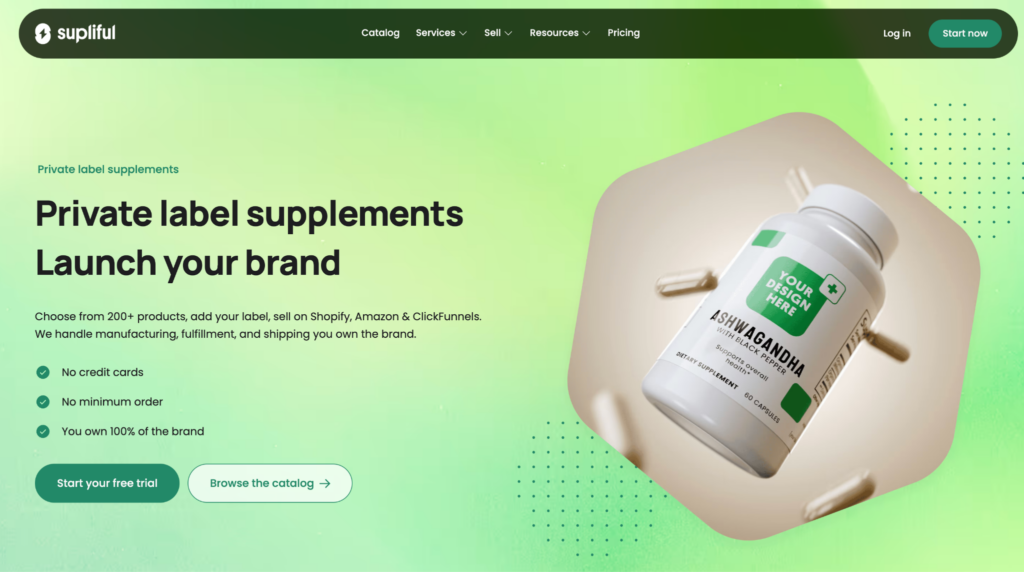
The result is a more decentralized industry where niche communities can access products designed around their specific interests – whether that means athletic recovery, cognitive performance, stress management, or daily wellness.
Supliful: Removing the Traditional Barriers to Wellness Entrepreneurship
Historically, launching a supplement brand required significant capital. Entrepreneurs needed manufacturing relationships, inventory storage, packaging operations, fulfillment systems, and regulatory knowledge before selling their first product.
That model created a high barrier to entry.
Companies such as Supliful are changing this structure by introducing a technology-driven approach to supplement entrepreneurship. Their platform operates around a zero-inventory, on-demand drop-shipping model, allowing creators to develop and sell products without purchasing large quantities upfront.
For independent wellness professionals, this removes one of the biggest risks in the industry: investing thousands of dollars into inventory before knowing whether customers will respond.
The model allows creators to focus on what they understand best – education, community building, and product positioning – while the operational infrastructure is handled through the platform.
Quality control remains a central concern in supplements, and modern consumers expect transparency. Supliful emphasizes manufacturing through FDA-registered facilities operating under current Good Manufacturing Practices (cGMP), along with access to Certificates of Analysis (COAs) that provide additional visibility into product testing and quality standards.
For wellness entrepreneurs, this represents a broader industry transformation: expertise and community influence are becoming just as important as traditional manufacturing scale.
From Consumer to Creator: Building a Modern Supplement Brand
The rise of targeted supplementation has created opportunities not only for consumers but also for professionals who want to turn their knowledge into products.
However, creating a supplement brand requires more than putting a logo on a bottle. Successful brands are built around clear problems, scientific responsibility, and trust.
For professionals considering entering the space, the process begins with several strategic questions:
1. Identify a specific audience and problem
The strongest supplement brands are not built around “everyone.” They focus on clearly defined communities.
A strength coach might create recovery products for amateur athletes. A wellness educator might focus on stress-support formulas for professionals. A nutrition specialist might develop products for a specific dietary lifestyle.
2. Research ingredients and compliance requirements
Every formulation decision should begin with evidence. Understanding ingredient research, appropriate dosages, and regulatory requirements is essential.
Creators should avoid exaggerated claims and focus on realistic benefits supported by science.
3. Select reliable manufacturing infrastructure
Modern platforms make it easier than ever to develop products without owning production facilities. Learning how to make your own supplements involves understanding formulation selection, quality standards, labeling requirements, and choosing manufacturing partners capable of meeting compliance expectations.
4. Build trust through education
The future of wellness brands will belong to companies that educate rather than simply advertise.
Consumers want to understand why an ingredient exists, how it works, and whether the product fits their lifestyle.
A supplement brand is ultimately a relationship built on credibility.
The Future of Personal Optimization
Peak performance is not achieved through a single capsule, a universal formula, or a shortcut around healthy habits.
The emerging supplement landscape reflects a deeper shift in how people think about their bodies. Instead of treating health as something passive, more individuals are viewing themselves as complex systems that can be understood, measured, and optimized.
The future belongs to personalization: better data, better education, and more targeted solutions.
For consumers, this means moving beyond random purchases toward informed decisions based on individual needs.
For wellness professionals, it means the opportunity to transform expertise into meaningful products that serve specific communities.
The next generation of supplementation will not be defined by bigger bottles or louder marketing. It will be defined by precision – understanding the human system well enough to provide the right support at the right time.